

Caring for a Parent Who Is Bedridden or Has Lost Most of Their Mobility
There is usually no single day on which it happens. Then one week you realise she has not been out of that room in a fortnight. The five things that matter, starting with the one that catches every family out.
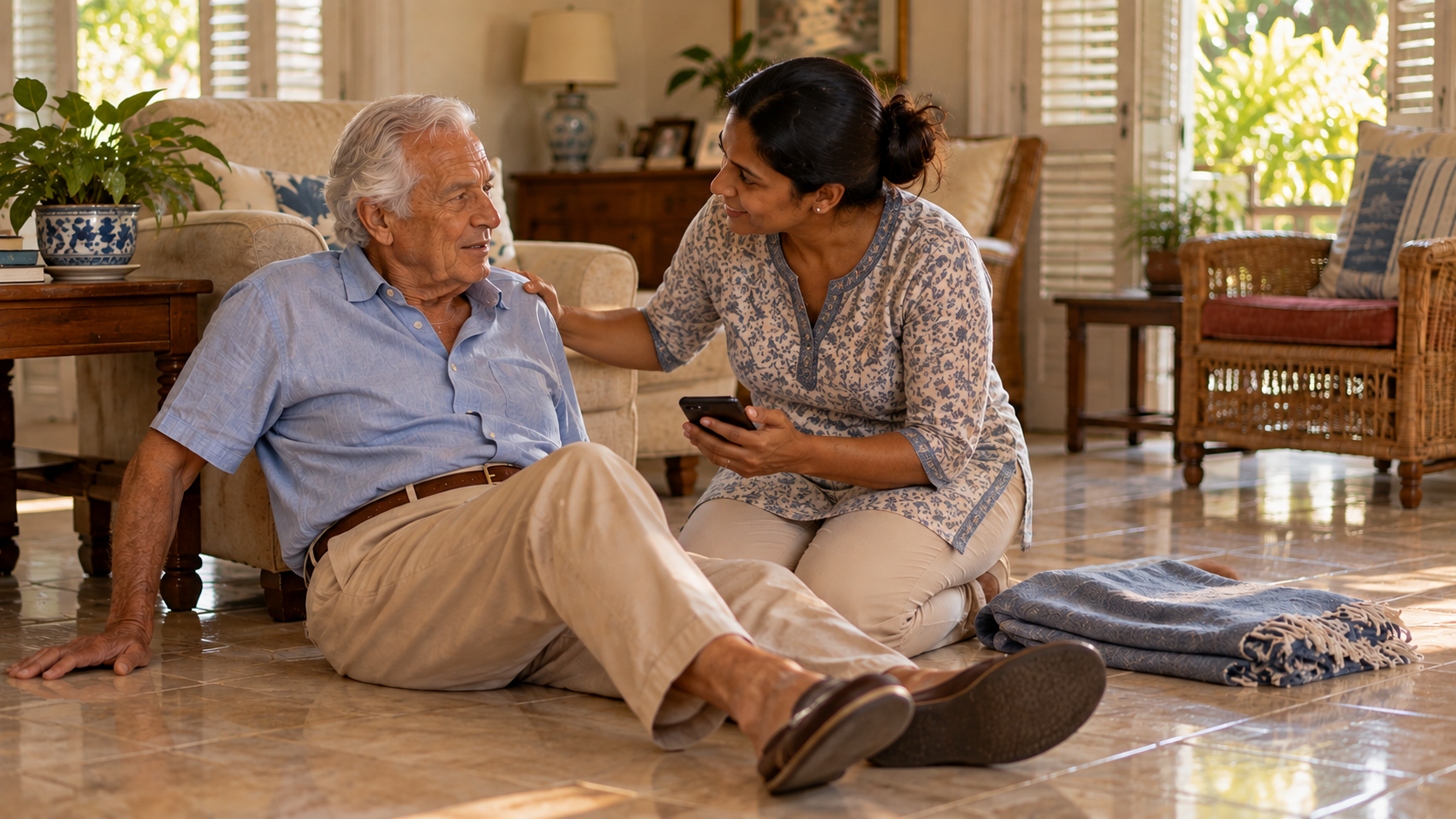
Falls and Mobility: Preventing Them, and What to Do in the Ten Minutes After One
He caught his foot on the step, grazed his knee and was perfectly fine. That fall did not matter. It is also the best warning anybody is going to give you. What reduces the risk, and what to do in the ten minutes after a fall.

Coming Home From Hospital: Caring for an Elderly Parent in the First Two Weeks
The ward rings at eleven to say he is being discharged that afternoon, and by four o'clock you are driving home with a paper bag of medicine and no idea what happens next. What the first two weeks actually look like, and the ten questions to ask before you leave.
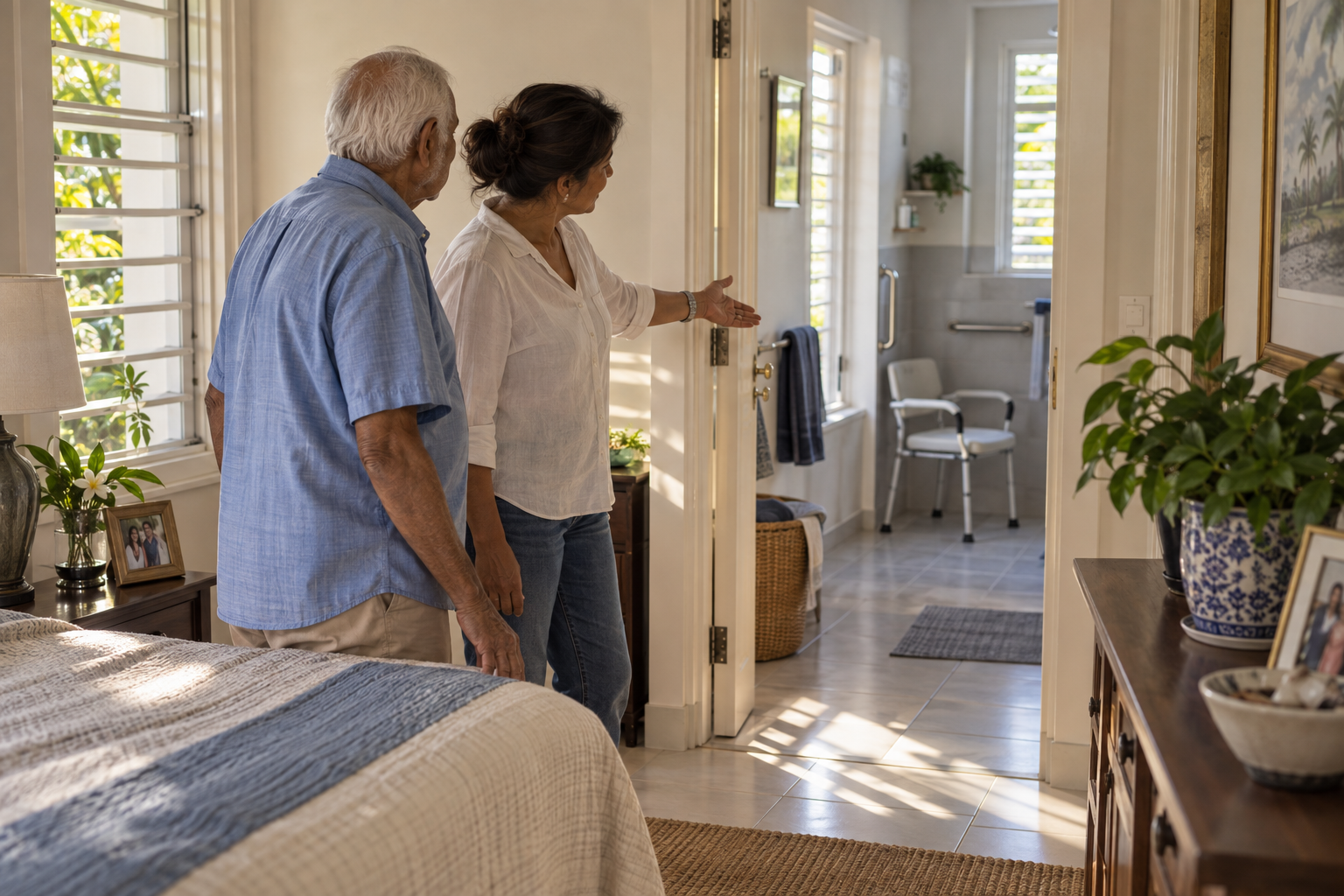
Caring for Someone Who Has Had a Stroke: The First Weeks at Home
When someone comes home after a stroke, the small questions arrive before breakfast. Here is how families can make the house safer, follow the care plan and support recovery without losing ordinary life.
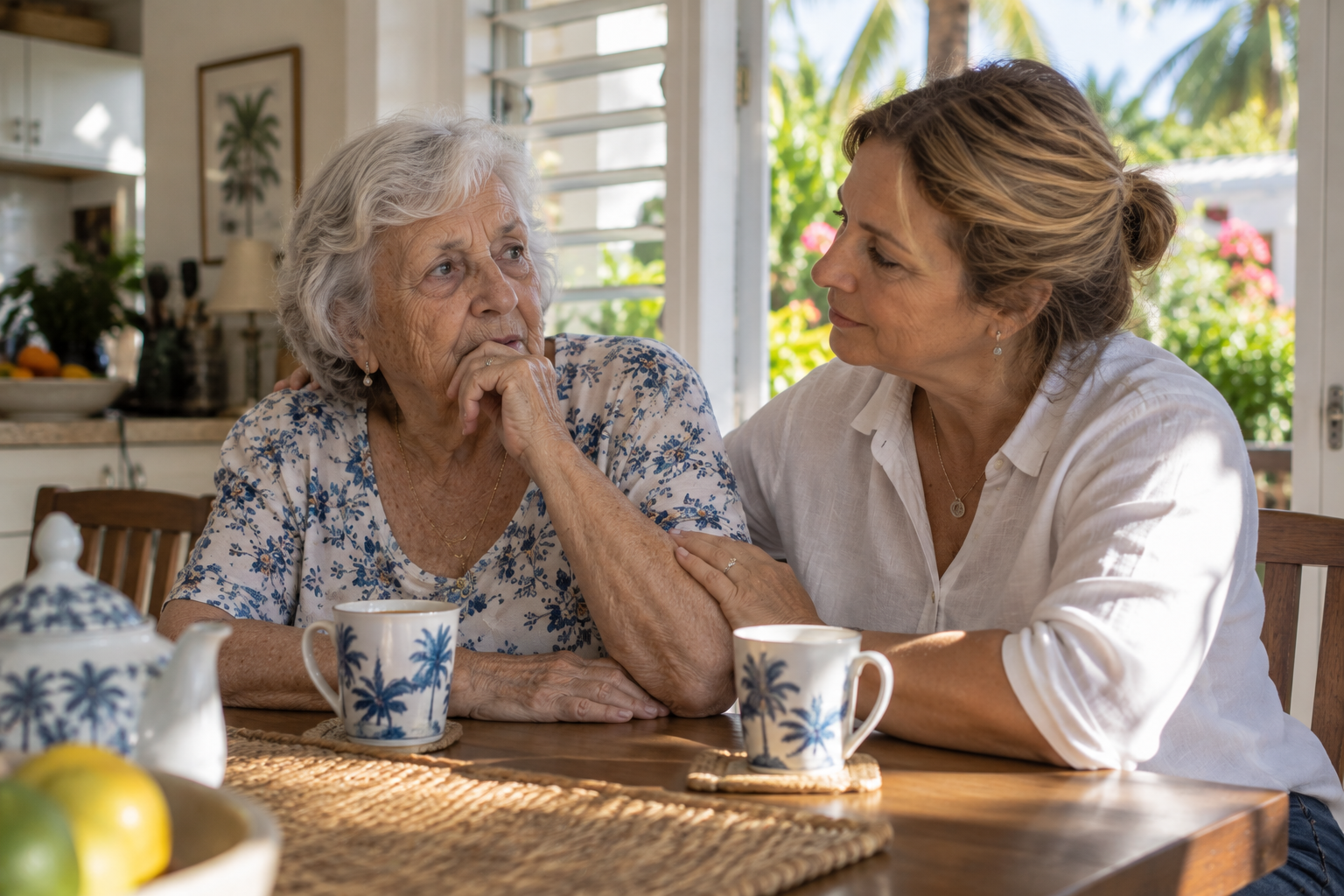
Alzheimer’s Care: Understanding and Supporting Someone You Love
At four o’clock most afternoons, a woman in Pereybère asks when she is going home. She is sitting in the house she has lived in for thirty-two years. Alzheimer’s care often begins with learning that reassurance can matter more than correction.

Loneliness in Later Life: Why It Happens, and Twenty Things That Help
Ask your father whether he is lonely and he will say no. Ask when he last had a proper conversation with someone who is not family, not a doctor and not on a screen, and the answer is often measured in weeks. Twenty practical things that help.
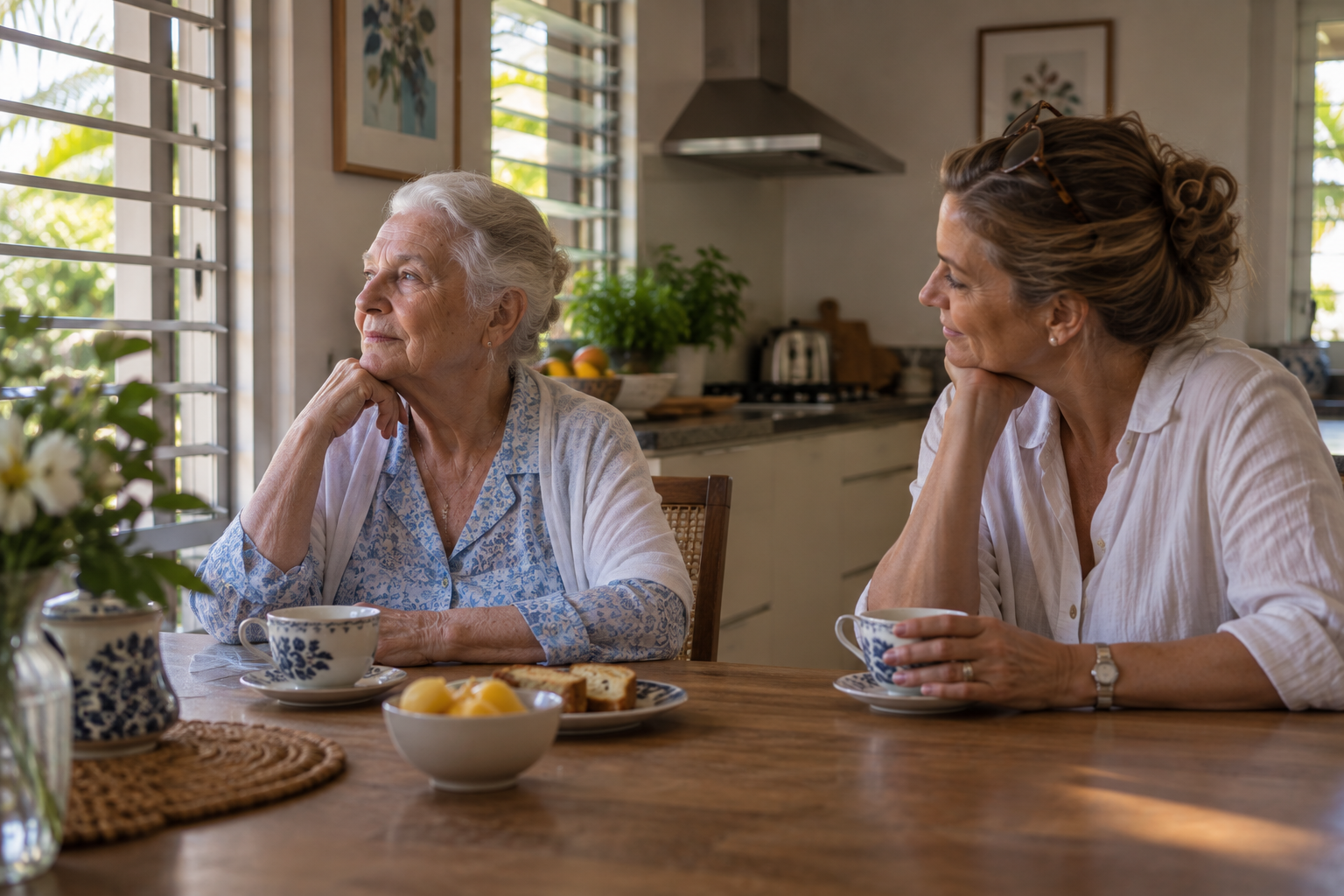
When an Elderly Parent Refuses Help
She said no. Not angrily, which would almost be easier. Why families lose this argument by making the case better, what to say instead, and what you can still do if the answer stays no.

Preparing a Home for an Elderly Parent: A Thirty-Minute Assessment
The hospital says Friday. It is Tuesday evening and the house has not changed since he went in. Most of what matters can be found in half an hour and fixed in an afternoon, and here is what to do first.
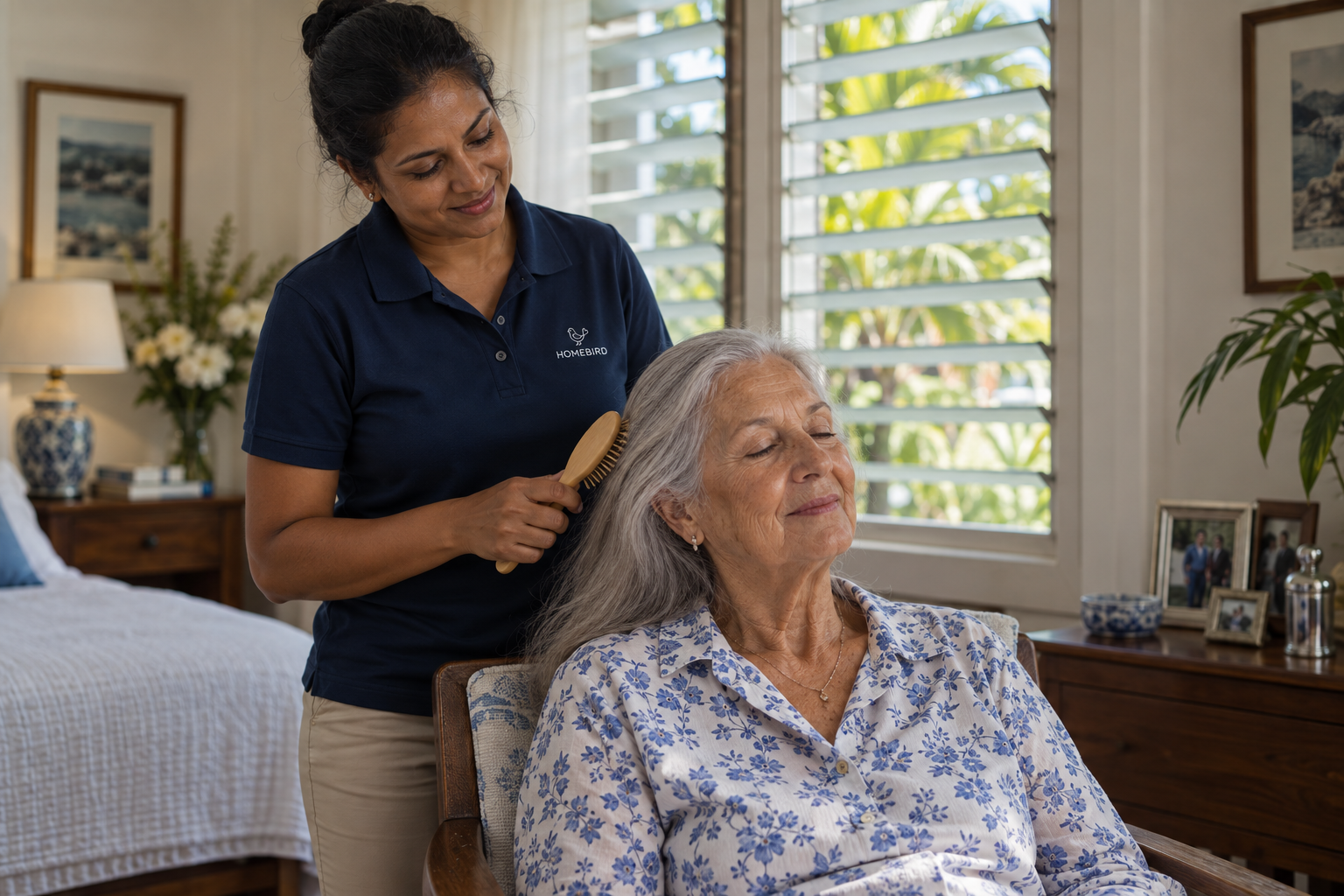
Personal Care: Why a Trained Stranger Is Often Easier Than a Daughter
The first time she helped her mother wash, neither of them said anything at all. Personal care is the part families dread most, and the difficulty is usually not the washing. It is who is doing it.

What Is Companion Care, and Is It Worth Paying For?
Your mother stopped going to the market eighteen months ago and has spoken to nobody but you since Tuesday. What companion care actually involves, and an honest answer to the objection nobody says out loud.
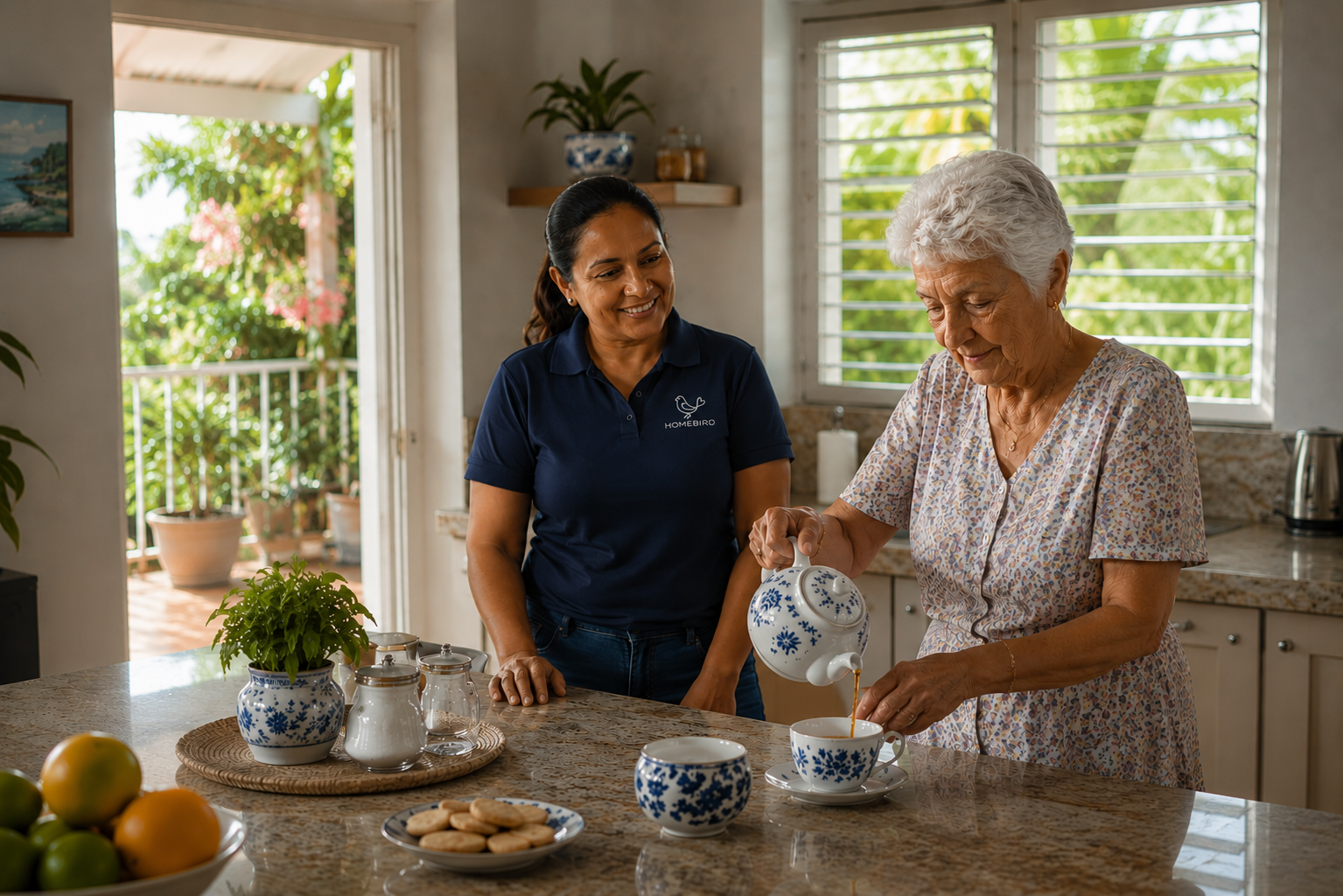
How Much Home Care Does Your Parent Actually Need?
Two weeks after her mother fell, the family had decided on live-in care. What she actually needed was help three mornings a week. How to work out how much care your parent needs, and why families get it wrong in both directions.
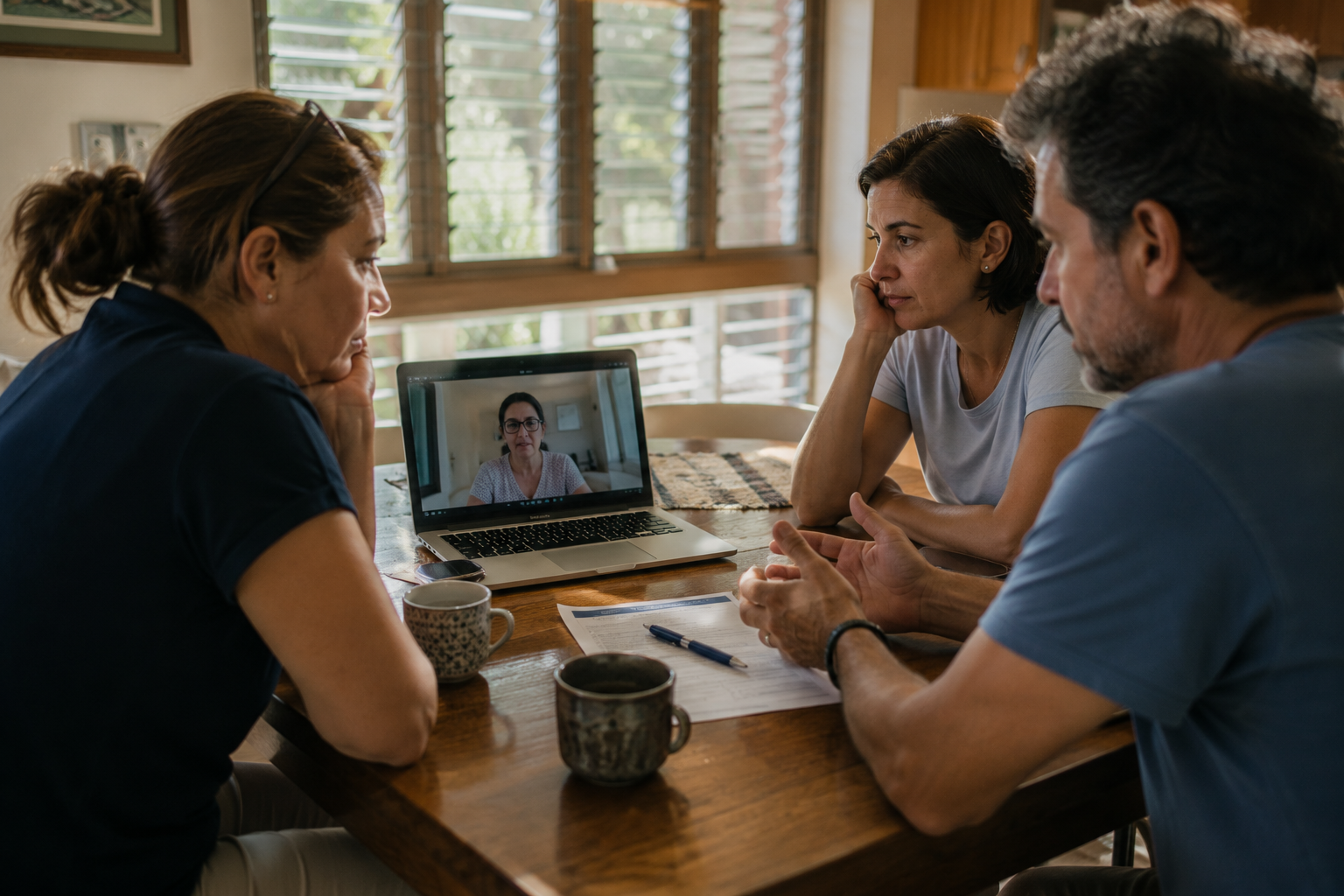
How to Share the Care of an Elderly Parent With Your Siblings
Somebody in your family collected a prescription twenty-six times last year, and nobody else knows. Why the care of a parent almost always lands on one person, and how to divide it without it turning into an argument.
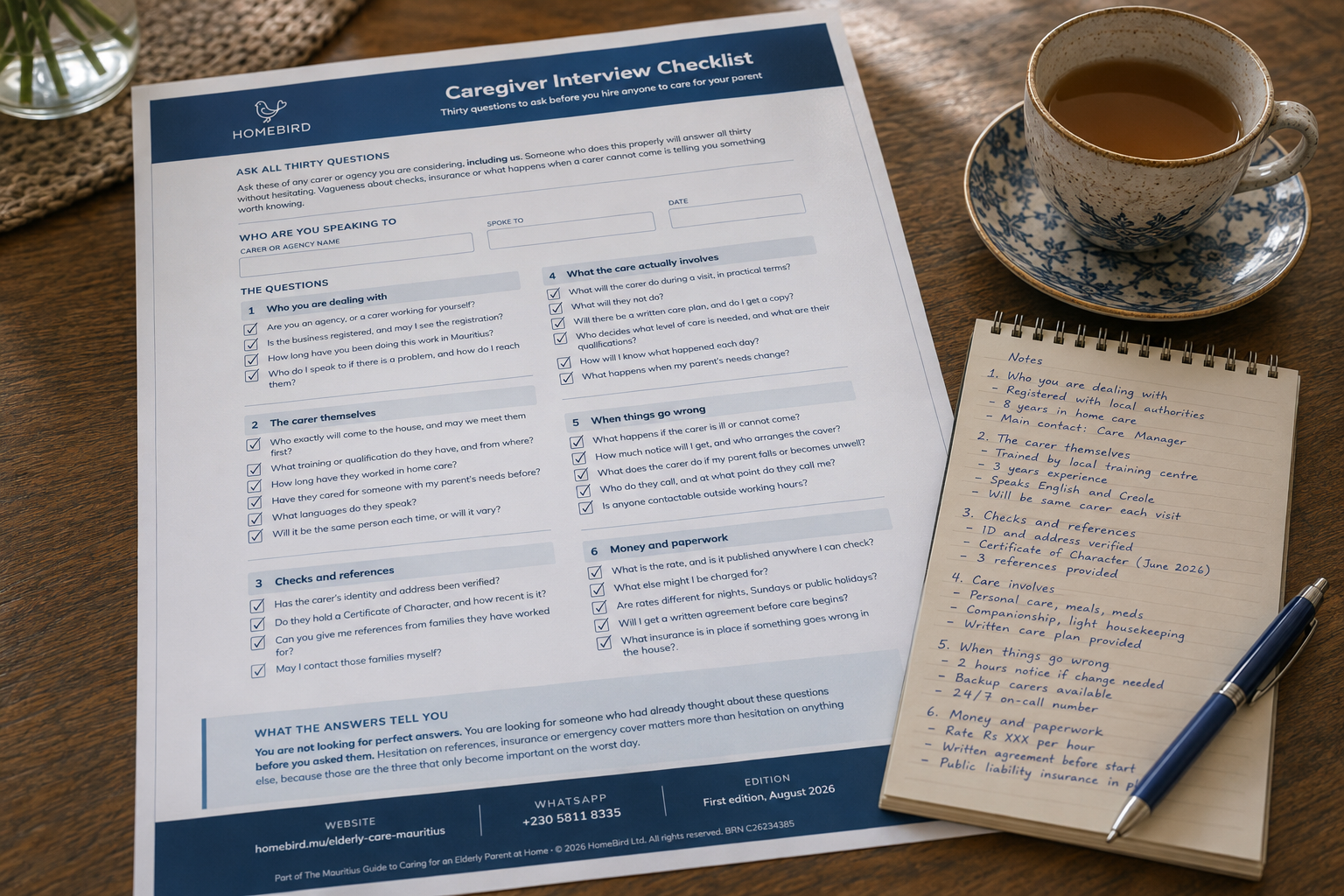
Thirty Questions to Ask Before You Hire a Carer in Mauritius
A woman is sitting in your mother's living room and in twenty minutes you have to decide whether to trust her. Thirty questions worth asking first, what a good answer sounds like, and a free printable checklist to take with you.
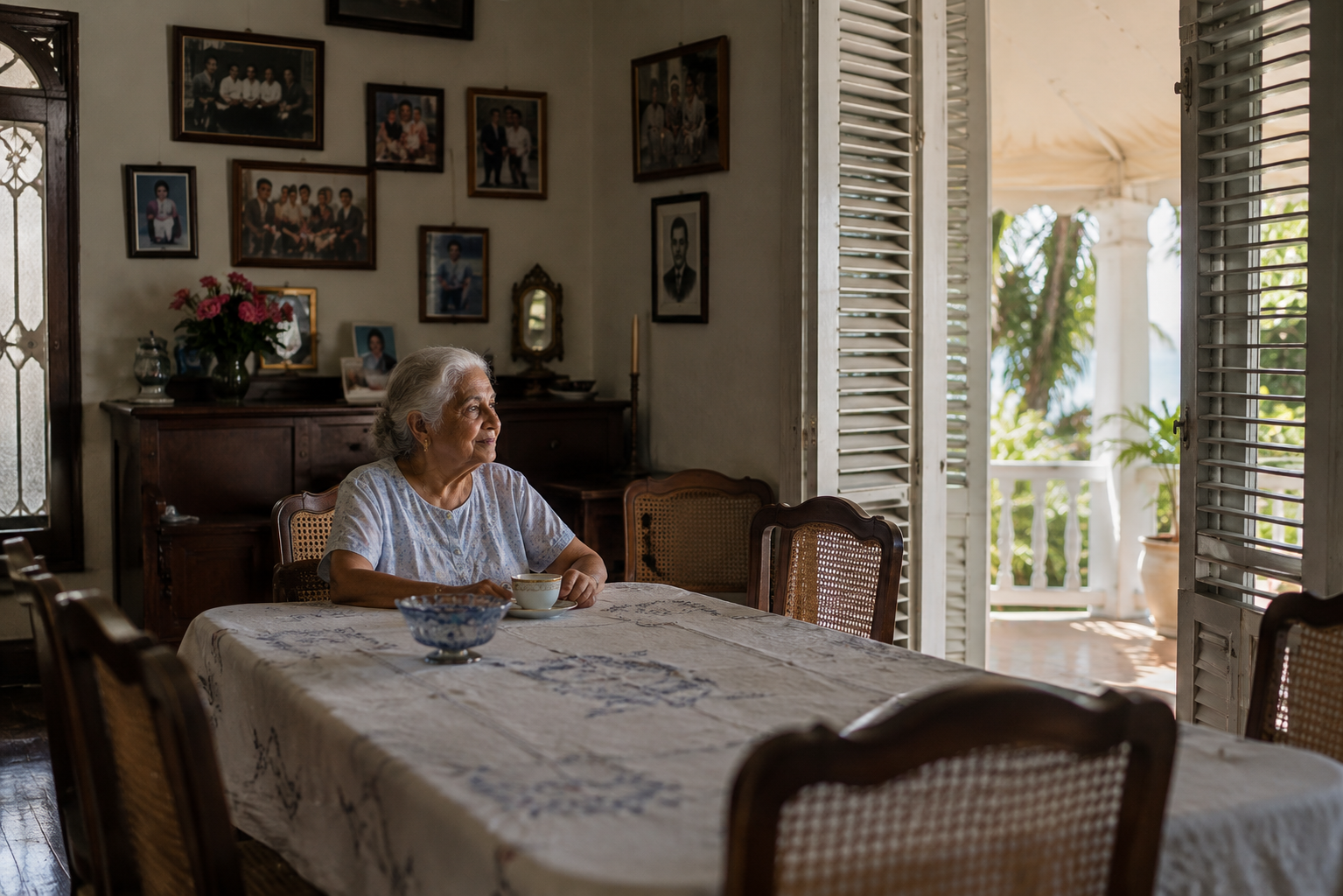
Mauritius Is Ageing, and Family Care Is Changing With It
A house in Grand Gaube built in 1978 for six people now holds one. In 1972 one Mauritian in seventeen was over 60. Today it is one in five. What that means for families deciding how to care for a parent.
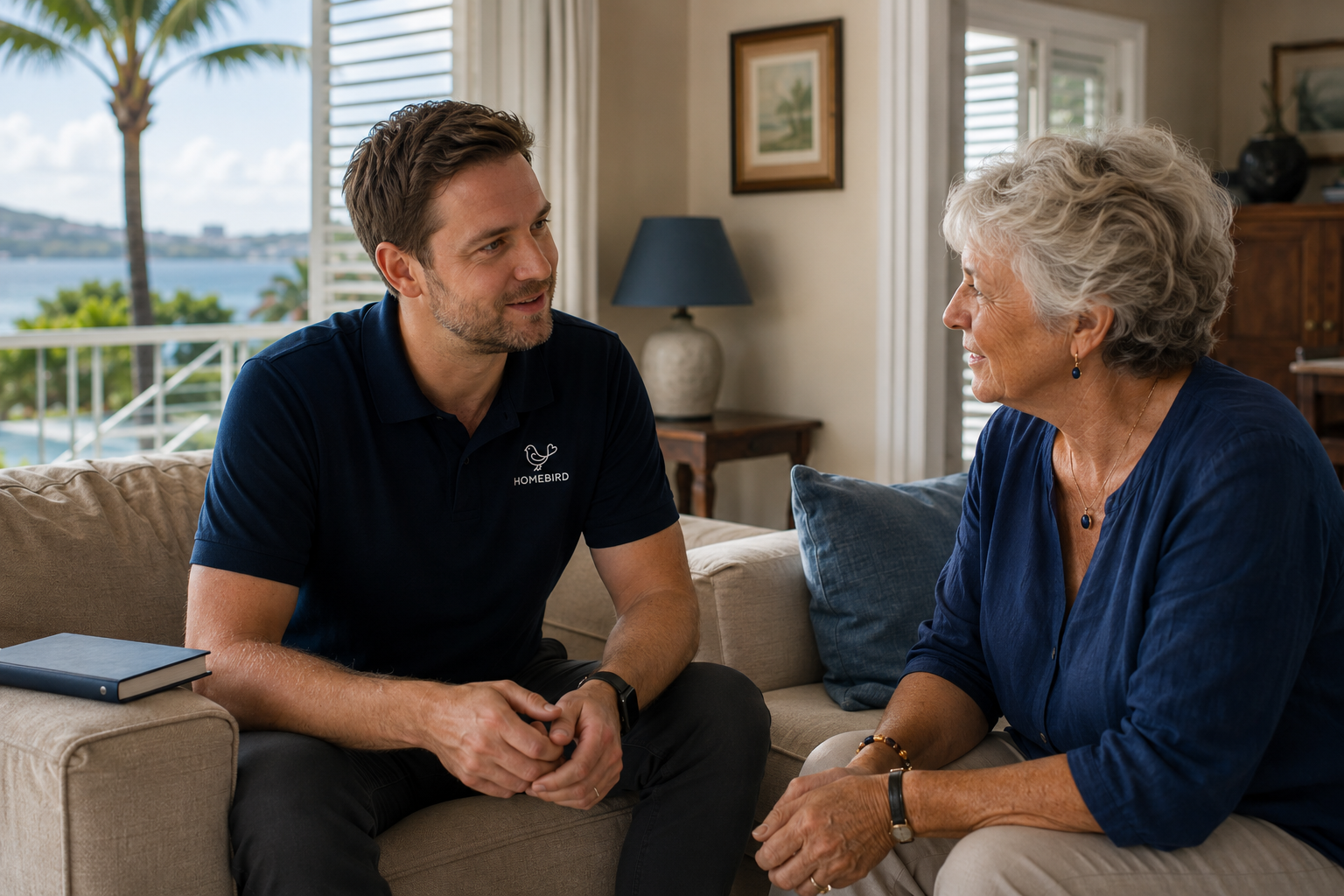
What Actually Happens During a Home Care Assessment
The word assessment sounds like a clipboard and a judgement being made. Here is what it actually involves, from the first message to the first morning a carer arrives, and what you do not need to prepare.

Needing Help Does Not Mean Losing Independence
A man in Triolet stopped washing every day rather than let his daughter help him. He would tell you he is independent. He has also not seen his friends since March. What independence actually means in later life, and why help can return it rather than take it.
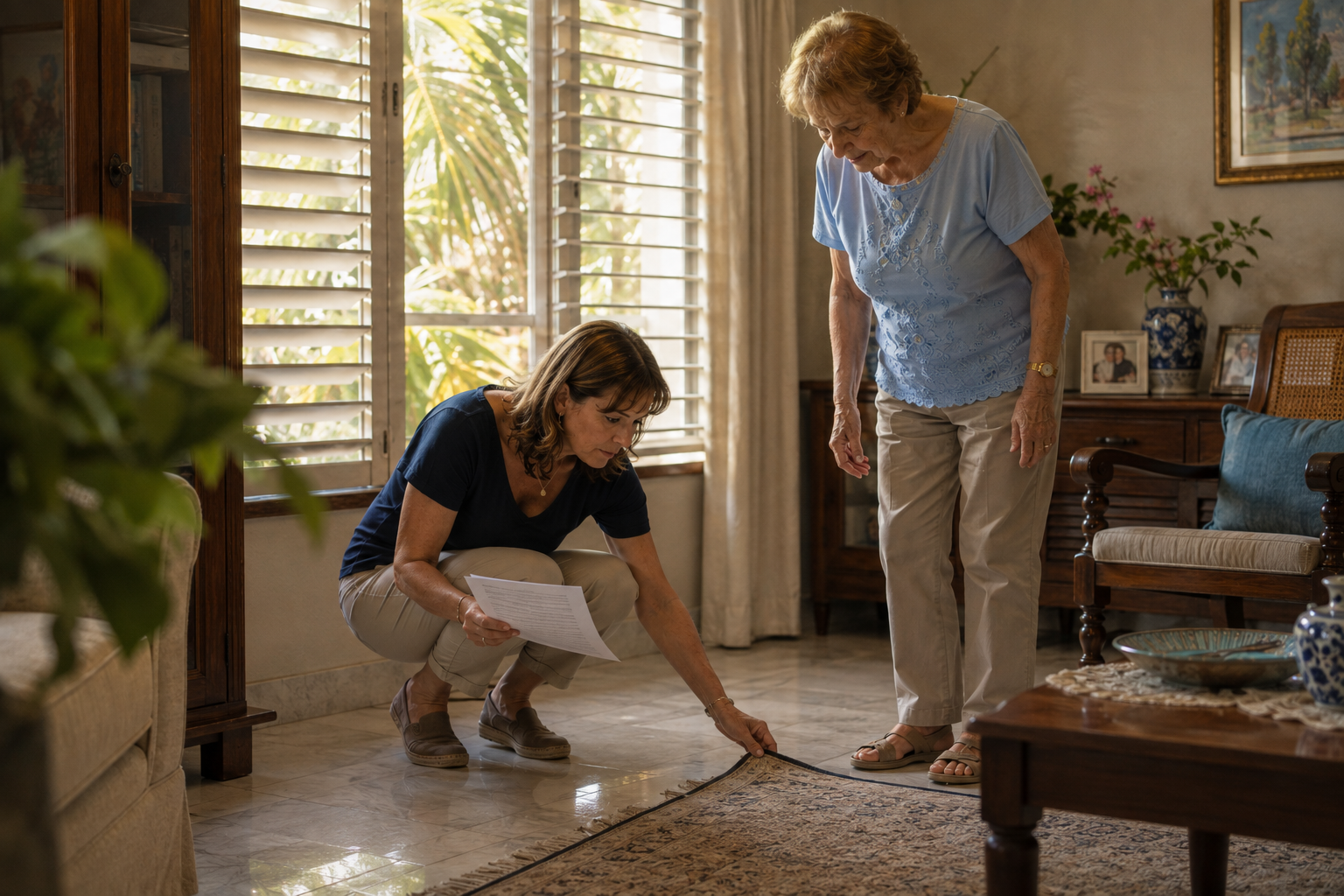
The Elderly Home Safety Checklist: A Room-by-Room Guide for Mauritian Families
The bathroom floor has been polished granite for twenty-two years and has never been a problem. Most families come to home safety after something has already happened. Here is how to walk the house before that, room by room, with a free printable checklist.

Why We Wrote a Guide to Elderly Care in Mauritius
At eleven at night, a woman in London searches for how to arrange care for her mother in Goodlands. The first result tells her to contact her local council. Six ways advice written for other countries does not apply here, and why we wrote our own.

How to Talk to Your Family About Home Care
It is one of the hardest decisions a family makes, and it usually arrives at a difficult moment. A parent has a fall. A diagnosis lands. Someone asks the question everyone has been dreading: should we look at a care home, or can we keep her at home? Here is an honest comparison to help you decide, without pretending one is always better.
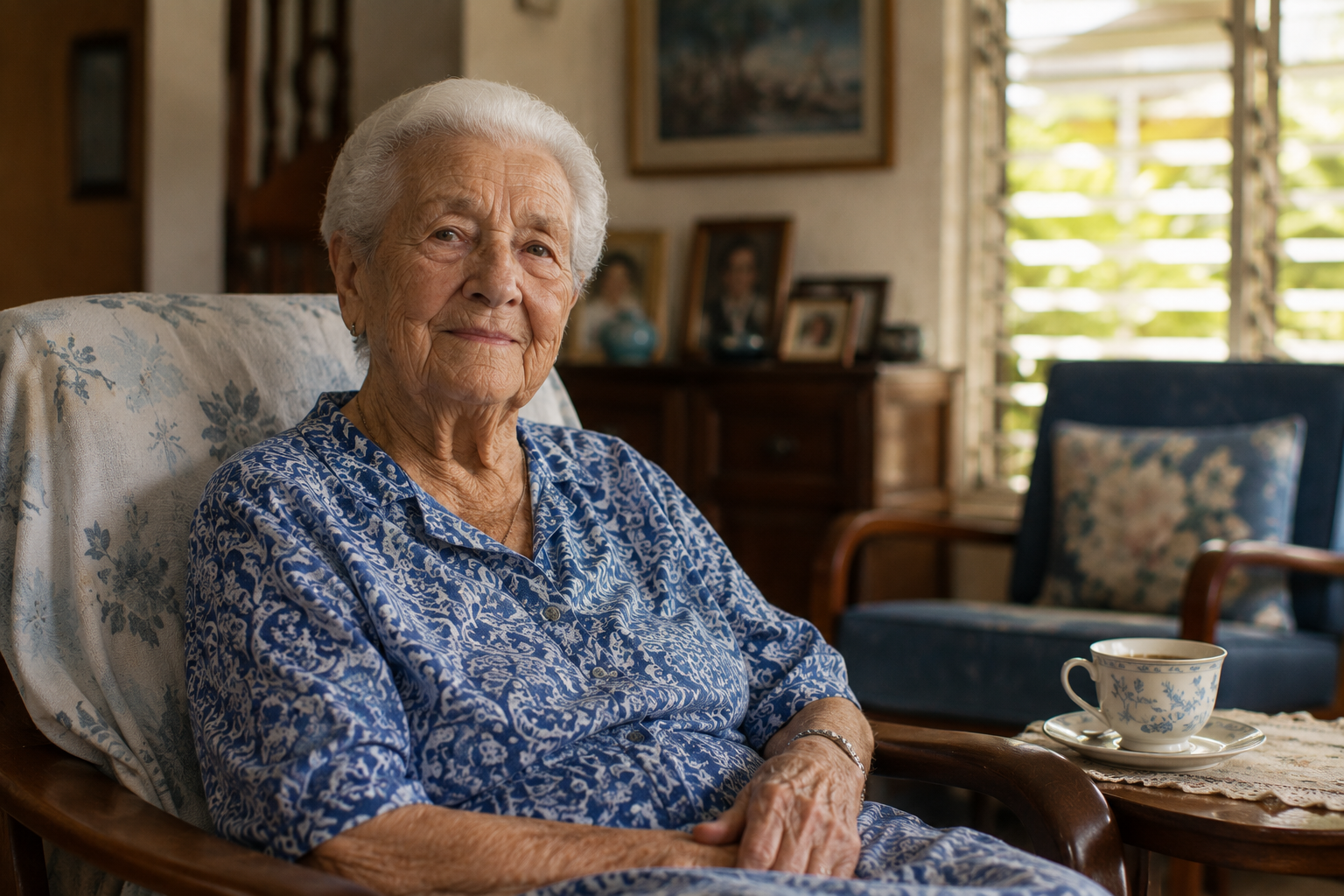
Home Care vs a Care Home: What Families in Mauritius Need to Know
It is one of the hardest decisions a family makes, and it usually arrives at a difficult moment. A parent has a fall. A diagnosis lands. Someone asks the question everyone has been dreading: should we look at a care home, or can we keep her at home? Here is an honest comparison to help you decide, without pretending one is always better.