
Home Care vs a Care Home: What Families in Mauritius Need to Know
It is one of the hardest decisions a family makes, and it usually arrives at a difficult moment. A parent has a fall. A diagnosis lands. A mother who has always managed suddenly cannot, and the family gathers around the kitchen table to work out what happens next. Somewhere in that conversation, someone asks the question everyone has been dreading: should we look at a care home, or can we keep her at home?
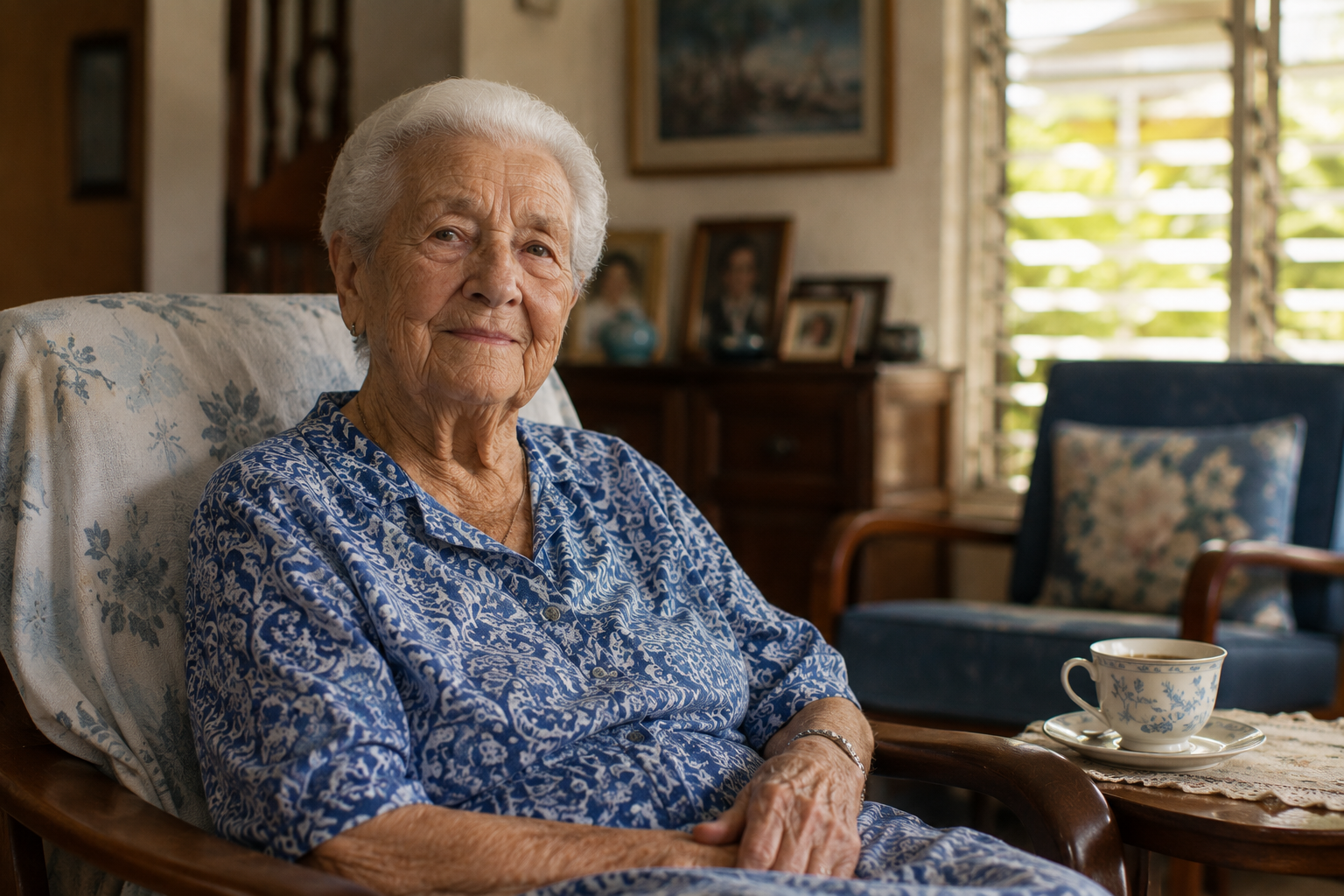
There is no single right answer. The right answer is the one that fits your parent, your family and your circumstances honestly. This article lays out the real differences between home care and a residential care home in Mauritius, without pretending one is always better, so you can make the decision with clear eyes rather than in a panic.
What each option actually means
The two are often talked about as if they were versions of the same thing. They are not. They are fundamentally different in where your parent lives and how care reaches them.
A care home
A residential care home is a facility your parent moves into. They give up their own home, or leave it behind, and live alongside other residents with staff on site. In Mauritius, residential care homes are licensed and regulated under the Residential Care Homes Act, overseen by the Ministry of Social Security. There are both charitable institutions and private residential care homes registered across the island. The fee typically covers accommodation, meals, laundry and general care, with some medical oversight.
Home care
Home care is the reverse. Instead of your parent moving to the care, the care comes to your parent. They stay in their own home, in familiar surroundings, and a carer visits for a few hours, for the day, or lives in. The support scales to whatever is needed, from a couple of companionship visits a week to full live-in care. This is what Homebird provides across Northern Mauritius, from Grand Baie and Pereybère to Goodlands, Triolet and Grand Gaube.
One important distinction: a home care agency is not a care home. Homebird does not run a residence and your parent never leaves their own home. Care is delivered where they already live. This matters when you are comparing options, because the two are governed differently and feel completely different to the person receiving care.
The cultural weight of this decision in Mauritius
It would be dishonest to discuss this as a purely practical choice, because in Mauritius it rarely is. There is a deep and respected tradition here of families caring for their elders at home, across every community on the island. For many families, the idea of a parent moving into a care home carries real weight, and sometimes a sense of guilt, however unfair that feeling is.
At the same time, families are more stretched than they once were. Adult children work long hours in Port Louis, or have moved abroad, or are caring for their own young children at the same time. The old assumption that someone will always be at home to care for grandma no longer matches how many families actually live. That gap, between what families want to provide and what they are able to provide, is exactly the gap that good home care is designed to fill.
Home care often resolves the tension rather than forcing a choice. Your parent stays at home, honouring the tradition and their own wishes, while a professional carries the load the family cannot carry alone.
Home care vs a care home: an honest comparison
Neither column is the winner. Read this as a description of trade-offs, not a scorecard.
Where your parent lives
Home care
Their own home, familiar surroundings
Care home
A shared residential facility
Familiarity
Home care
Own bed, own kitchen, own routines and neighbours
Care home
New environment, new routines, adjustment needed
Attention
Home care
One-to-one, built entirely around your parent
Care home
Staff shared across many residents
Continuity
Home care
The same carer or small team
Care home
Rotating shifts, more faces
Social life
Home care
Depends on visits and outings being arranged
Care home
Other residents on hand, built-in company
Cost shape
Home care
Scales with hours needed, flexible
Care home
Fixed monthly fee covering room and board
Best when
Home care
Staying home matters and needs can be met there
Care home
Needs are very high, or the home is unsuitable

The things families weigh most
Dignity and familiarity
For most older people, staying at home is what they would choose if asked. Familiar surroundings are especially protective for anyone with memory problems, where a new and confusing environment can accelerate distress and disorientation. If your parent is showing early signs of dementia, the case for keeping them somewhere they know is stronger still.
Safety
This is where a care home has a genuine advantage worth naming honestly. Staff are on site around the clock, and the building is set up for frailty. But home care closes much of that gap. A live-in carer provides overnight presence, and a home can be made considerably safer with grab rails, better lighting and removed trip hazards. The real question is not "which is safe" but "can my parent's specific needs be met safely at home", and that is answered by an honest assessment, not an assumption.
Cost
Cost comparisons are less obvious than they look. A care home charges a fixed monthly fee covering the room, meals and general care. Home care scales with need: a few visits a week is far cheaper than a care home, while intensive round-the-clock home care can cost more. The honest way to compare is against your parent's actual level of need, not a headline figure. For many families needing daytime or part-time support, home care is both the more affordable and the more comfortable option.
The family's own capacity
Be honest about this one, because it is the factor families most often ignore until they are exhausted. Whatever you choose, the goal is care your parent needs delivered in a way the family can sustain. An arrangement that burns out a daughter within six months has not solved anything. Home care exists partly to protect the family as well as the parent.
When a care home is genuinely the better choice
A good home care provider will tell you honestly when home is not the right answer. A care home may be the wiser choice when:
Your parent needs constant, complex clinical supervision that goes beyond what home care can safely provide
The home itself is genuinely unsuitable and cannot be adapted, for example with no way to manage stairs or serious safety problems
Your parent is deeply isolated and would benefit from the built-in community of other residents
The family has weighed everything honestly and concluded they cannot sustain home care even with professional support
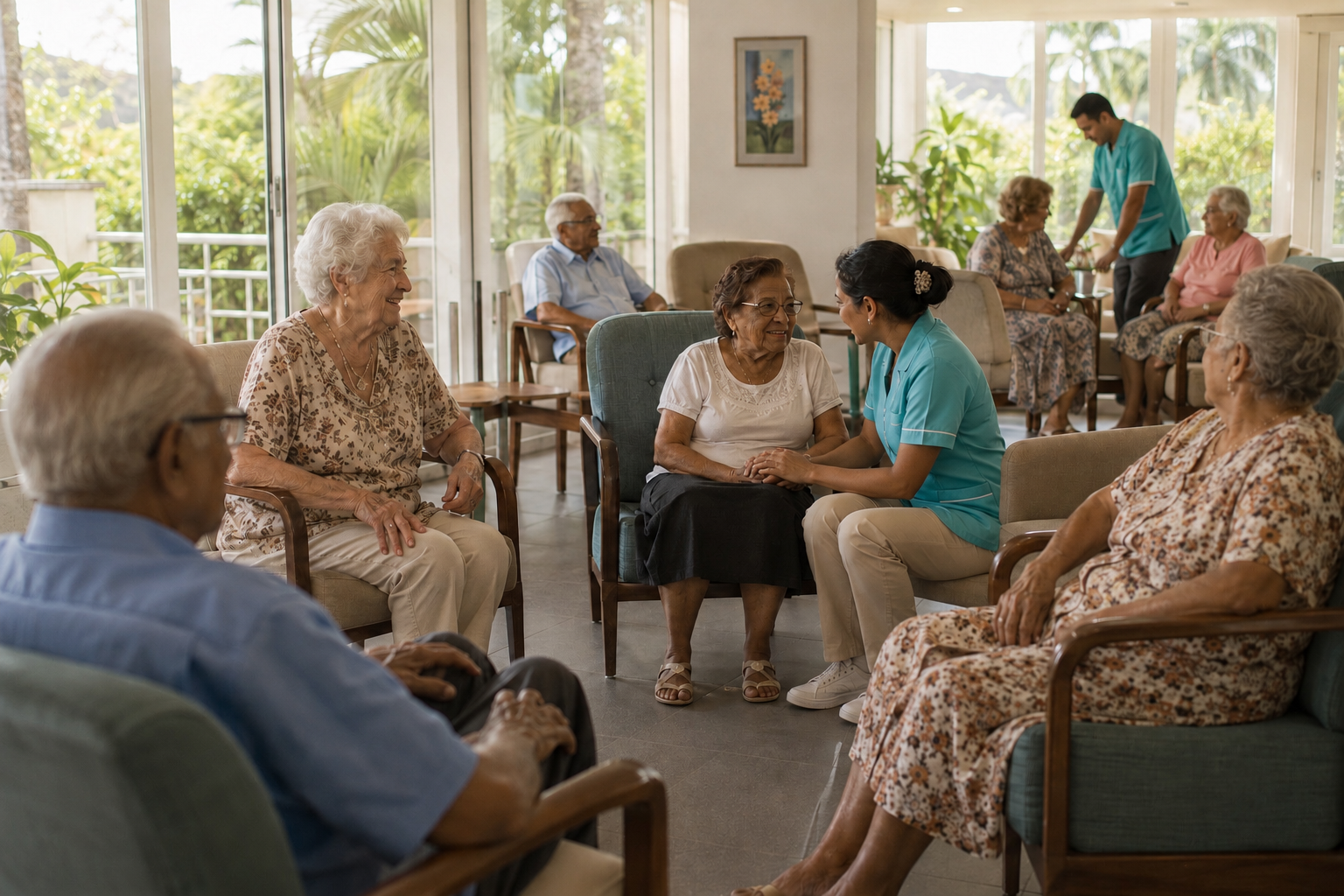
There is no shame in reaching this conclusion. Choosing a good care home for a parent who truly needs one is an act of love, not a failure.
When home care is the better choice
For many families in Northern Mauritius, home care turns out to be the option that fits, particularly when:
Your parent is clear that they want to stay in their own home
Their needs, while real, can be met safely at home with the right support
Familiarity matters for their wellbeing, especially with memory problems
You want one-to-one attention and a consistent, trusted carer
You want the flexibility to start small and increase support as needs change
One of the quiet advantages of home care is that it does not force an all-or-nothing decision today. You can begin with a few visits a week and increase to full live-in care later if needs grow. A care home, by contrast, is a single large move. Home care lets the support follow your parent's needs rather than the other way around.
How to decide, calmly
If you are facing this choice right now, a few steps make it clearer and less frightening.
Ask your parent what they want. Where it is possible, their wishes should lead. Most people, asked plainly, want to stay home.
Get an honest assessment of their needs. Not a guess made in worry, but a proper look at what care they actually require. A good agency does this at no cost and will tell you frankly if home is not the safe answer.
Look honestly at the home. What could make it safer? Often less than families fear.
Be honest about the family. What can you realistically sustain, and where do you need professional help to carry the load?
Compare on real needs, not headlines. Price both options against the actual level of care required, not a general impression.
The decision feels enormous, and it is, but it is not permanent. Circumstances change, and care can change with them. Starting with home care keeps your options open, keeps your parent where they are most comfortable, and buys the whole family time to see how things unfold before making any larger move.
For the fuller comparison, and everything that comes before and after this decision, read our free guide for families in Mauritius.
Talk to Homebird
Homebird is a professional in-home care agency serving families across Northern Mauritius. If you are weighing up home care against a care home for a parent, we are glad to help you think it through honestly, including telling you if we believe home is not the right answer. Our carers are trained, verified and supported, and our care is built around keeping your parent safe, comfortable and at home wherever that is genuinely the best choice.
WhatsApp or call: +230 5811 8335
Email: hello@homebird.mu
Care that feels like family.
This article is for general information and does not replace medical advice. If you are worried about a parent's health, please speak to a doctor. Guidance on warning signs draws on established elderly care resources and geriatric care standards.