
Mauritius Is Ageing, and Family Care Is Changing With It
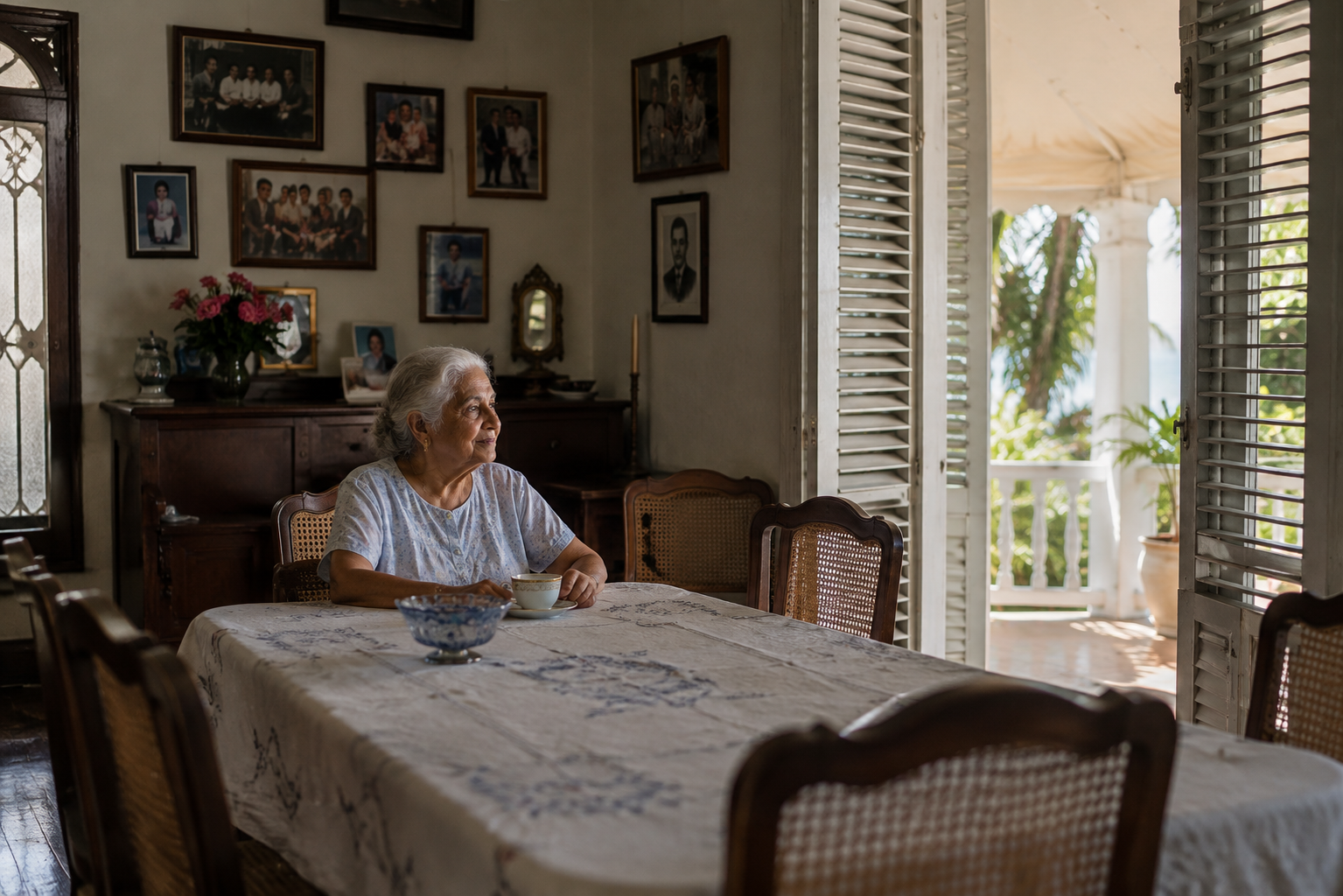
There is a house in Grand Gaube that was built in 1978 for six people. Two parents, three children, and a grandmother in the back room. Somebody was always in the kitchen and there was always noise on the verandah.
One person lives in it now. The children are in Quatre Bornes, in Melbourne and in Lyon, and they call constantly. But the house is quiet, and when the light goes at half past six there is nobody there to notice whether she has eaten.
That house is not unusual and it is not a story about a family that stopped caring. It is the ordinary arithmetic of a country that has changed faster than most people realise, and it is why elderly care in Mauritius has become a conversation families are having earlier than their own parents ever did.
The scale of it is easy to underestimate
In 1972, people aged 60 and over made up 5.9% of the population of Mauritius. By 2023 that figure was 20.1%. One person in five, where fifty years ago it was one in seventeen.
The 2022 census tells the same story from another angle. Between 2011 and 2022 the median age of the country rose from 34 to 38, which is a considerable shift in a single decade. Statistics Mauritius attributes it to the two things that usually drive it: people living longer, and fewer children being born.
None of this is bad news. Longer lives are what everybody wants. But it does mean that a generation of Mauritian families is now facing something their own parents largely did not, which is a long stretch of years in which an older person is well but no longer quite managing everything alone.
The houses got quieter at the same time
The other half of the change is less discussed. Over the same eleven years, the average Mauritian household shrank from 3.5 people to 3.3.
Two tenths of a person sounds like nothing. Across a whole country it means a great many houses that were built for a full family now hold one or two people, and it means fewer relatives within walking distance when something goes wrong.
An older person living alone is not automatically an older person who needs care, and it is worth saying plainly that most manage very well and value the independence enormously. But the margin is thinner. When there were four adults in a house, a bad fortnight was absorbed without anyone calling it a crisis. With one, a chest infection or a fall on the bathroom tiles becomes the whole family's emergency by Thursday.
When there were four adults in a house, a bad fortnight was absorbed. With one, it becomes the whole family's emergency by Thursday.
When the children live in another country
More than a hundred thousand Mauritians live abroad, spread mainly across the UK, France, Australia, Canada and South Africa. For a great many of them, a parent in Goodlands or Grand Baie is a daily presence on a phone screen and a permanent low hum of worry.
A daughter in London can be extremely close to her mother. She can call every morning, manage the pharmacy account, know the name of every one of her mother's medications. What she cannot do is be there at ten at night when there has been a fall in the bathroom, drive her to a specialist appointment tomorrow, or notice that the fridge has been more or less empty for three days.
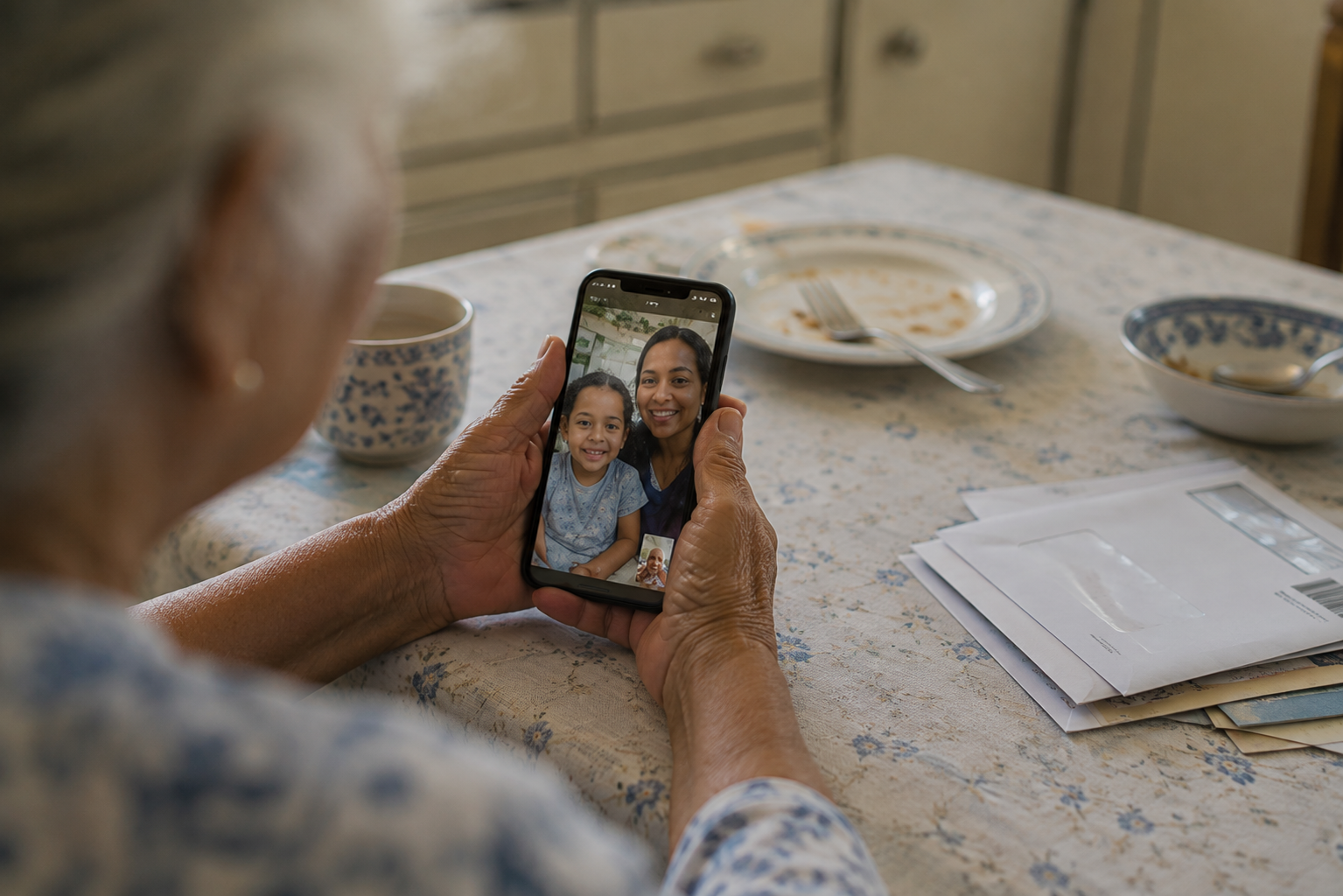
And a video call is a poor instrument for noticing. People arrange themselves for the camera. They sit up, they sound bright, and they say the week has been fine. The things you would spot in ten seconds standing in the kitchen, the untouched shopping, the pile of unopened post, the slight unsteadiness getting out of the chair, do not survive a phone screen.
This is where distance turns into guilt, and the guilt is almost always misplaced. Living overseas does not make someone a worse son or daughter. It means the practical help has to come from someone who can physically be in the room.
Home care is not the opposite of family care
The most common thing that stops families arranging support is a feeling that it means something has failed. That the family should have managed, and hiring someone is an admission that it did not.
It is worth turning that over. What actually happens in most arrangements that work is that everybody keeps doing what they are placed to do. A daughter in Triolet still visits on Saturdays and takes her mother to the temple. A son in Melbourne still calls every evening. A grandson still comes for lunch on a Sunday. And a carer comes three mornings a week to help with washing, cook something proper, and be the person who notices that the shopping has not been touched.
Nobody has been replaced. The family is still doing the part only family can do, which is being family, and someone else is doing the part that requires being present on a Tuesday morning.
The other thing that changes is timing. Families tend to arrange care in the week after something has gone badly wrong, which is the worst possible moment to be making decisions. A few hours a week arranged earlier, before there is a crisis to respond to, gives everyone the thing that is hardest to get afterwards, which is time to choose properly. It also means somebody is in the house often enough to see a problem while it is still small.
Nobody has been replaced. The family keeps doing the part only family can do, and someone else does the part that requires being there on a Tuesday morning.
You do not have to wait until it is serious
Home care does not mean somebody in the house all day. For a lot of the families we work with it starts at two mornings a week, and for some it never becomes more than that.
If you have started to worry about a parent, particularly if you are reading this from another country, the useful thing is to find out where you actually stand. You may well discover they need considerably less than you feared. You may discover that a few hours would change the week entirely. Either answer is better than not knowing, and neither requires you to decide anything today.
Our free guide for Mauritian families covers what to look for, and there is a printable checklist for walking the house if you would rather start there.
This article is part of The Mauritius Guide to Caring for an Elderly Parent at Home, our free guide for families across the island. See the full guide.
Talk to Homebird
Homebird is a professional in-home care agency serving families across Northern Mauritius. If you are worried about a parent, or arranging things from overseas and not sure where to start, we are glad to talk it through. No obligation and no pressure.
WhatsApp or call: +230 5811 8335
Email: hello@homebird.mu
Care that feels like family.
This article is for general information and is not a substitute for professional medical advice. If you are concerned about an older person's health or safety, speak to their doctor or another appropriate healthcare professional.