
The Elderly Home Safety Checklist: A Room-by-Room Guide for Mauritian Families
The bathroom floor in your mother's house has been polished granite for twenty-two years. It has never been a problem. She has washed in that shower every morning of those twenty-two years without incident, which is precisely why nobody has ever thought about it.
Then one morning she puts a hand out for something to hold, and there is nothing there.
Most families come to an elderly home safety checklist after something has already happened. A slip, a near miss, a bruise explained away three days later. It is worth doing before that, and it costs far less than people expect. Very little of what follows requires a builder. Most of it takes an afternoon and a trip to the hardware shop in Goodlands.
The mistake almost everyone makes
Families tend to imagine home safety as a renovation. Widening doorways. Installing a walk-in shower. Moving the bedroom downstairs. Those things matter eventually, but they are not where the risk actually sits, and treating safety as a big expensive project is the most reliable way to never start it.
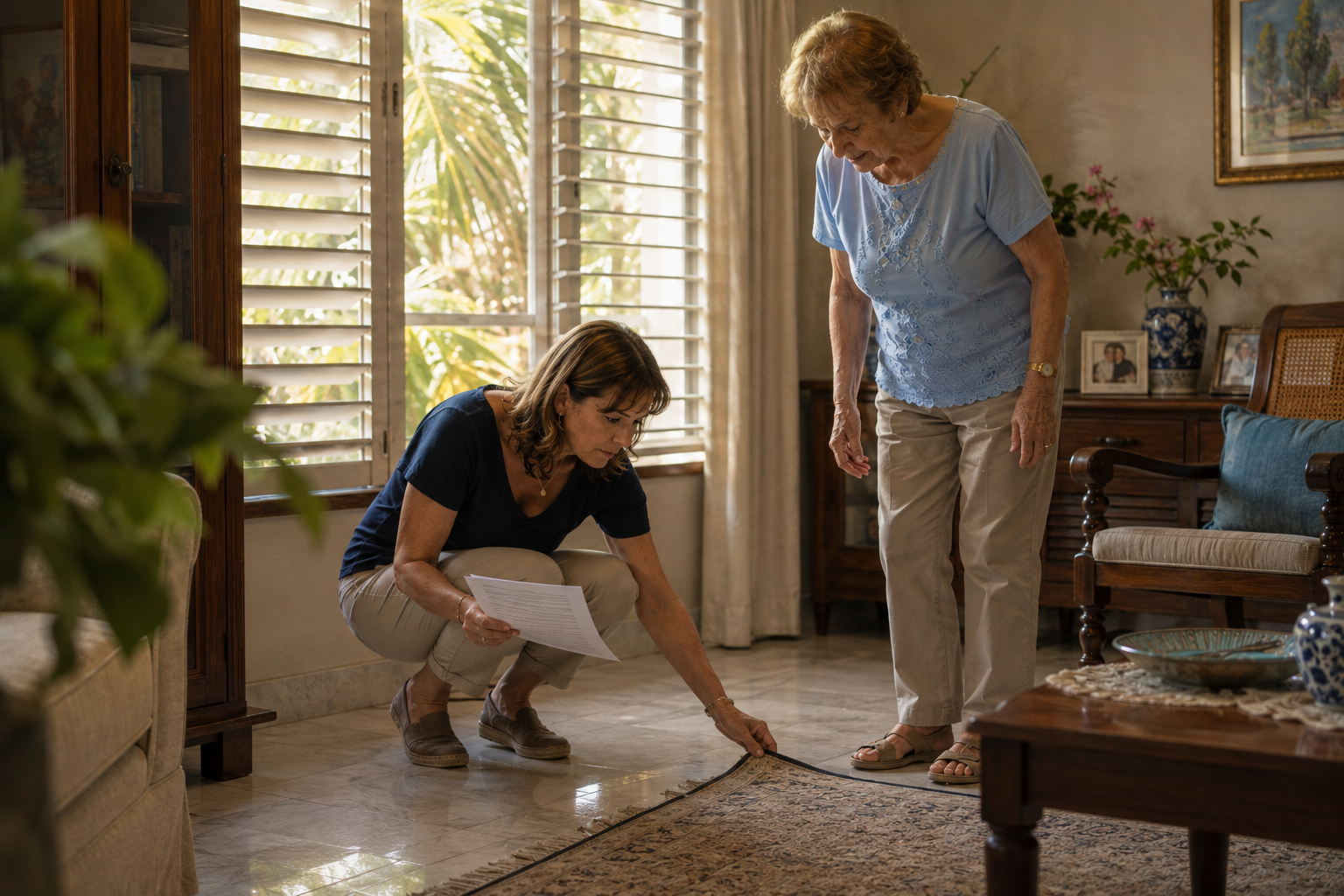
The things that cause falls are much smaller and much duller. A rug that has curled at the corner. A fan cable crossing a doorway. A light bulb that blew a month ago on the route between the bedroom and the toilet. A pair of loose flip-flops. None of these will be noticed by anyone who has lived with them for years, which is exactly the problem, and exactly why an outside eye helps.
How to use this elderly home safety checklist
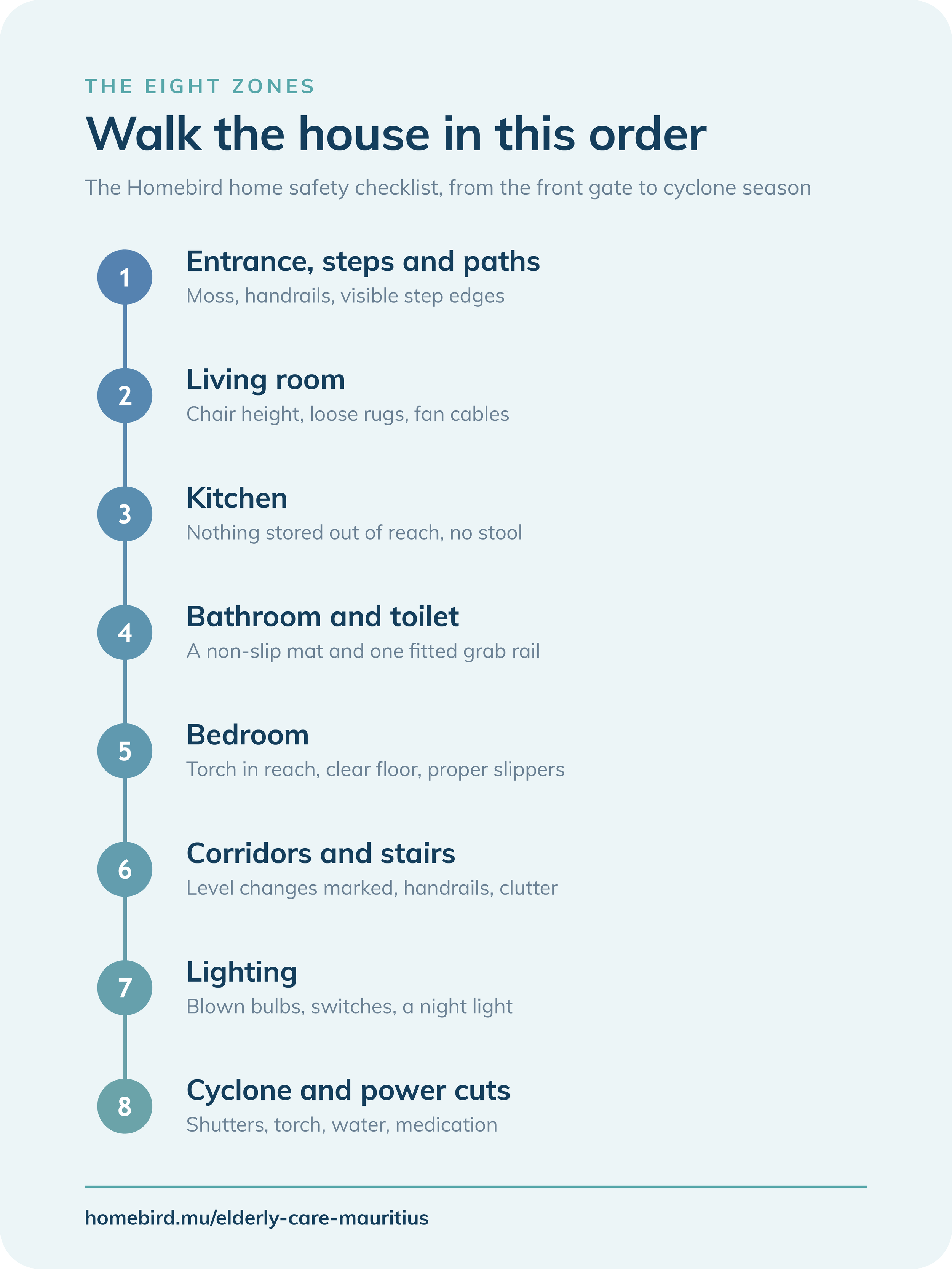
Walk the house in the order your parent actually uses it. Start at the front gate, move through the living room and kitchen, then the bathroom, then the bedroom, then the route between those last two in the dark. That final walk matters most, because night-time journeys to the toilet are where a great many falls happen.
Do it slowly, and do it at their pace rather than yours. If they use a hand on the wall to steady themselves in the corridor, note where that hand lands. That is where a rail belongs.
You are looking for three things: what could be tripped over, what could be slipped on, and what could not be reached in a hurry.
Room by room, and what actually matters in each
The entrance and the path.
In the north, paths grow moss quickly on the shaded side, and after rain a concrete path can be as slippery as a wet tile. Clear it, and check that every step up to the house has a handrail that does not move when you lean on it.
The living room.
The single most useful change is usually the chair. If your parent pulls on furniture to stand up, the chair is too low, and a higher seat removes that risk many times a day. After that, look down: loose mats and trailing fan cables are the two most common trip hazards in Mauritian sitting rooms.
The kitchen.
If there is a stool being used to reach a high shelf, that is the first thing to fix. Move everyday items down to between waist and shoulder height. While you are there, check the age of the gas hose and regulator.
The bathroom.
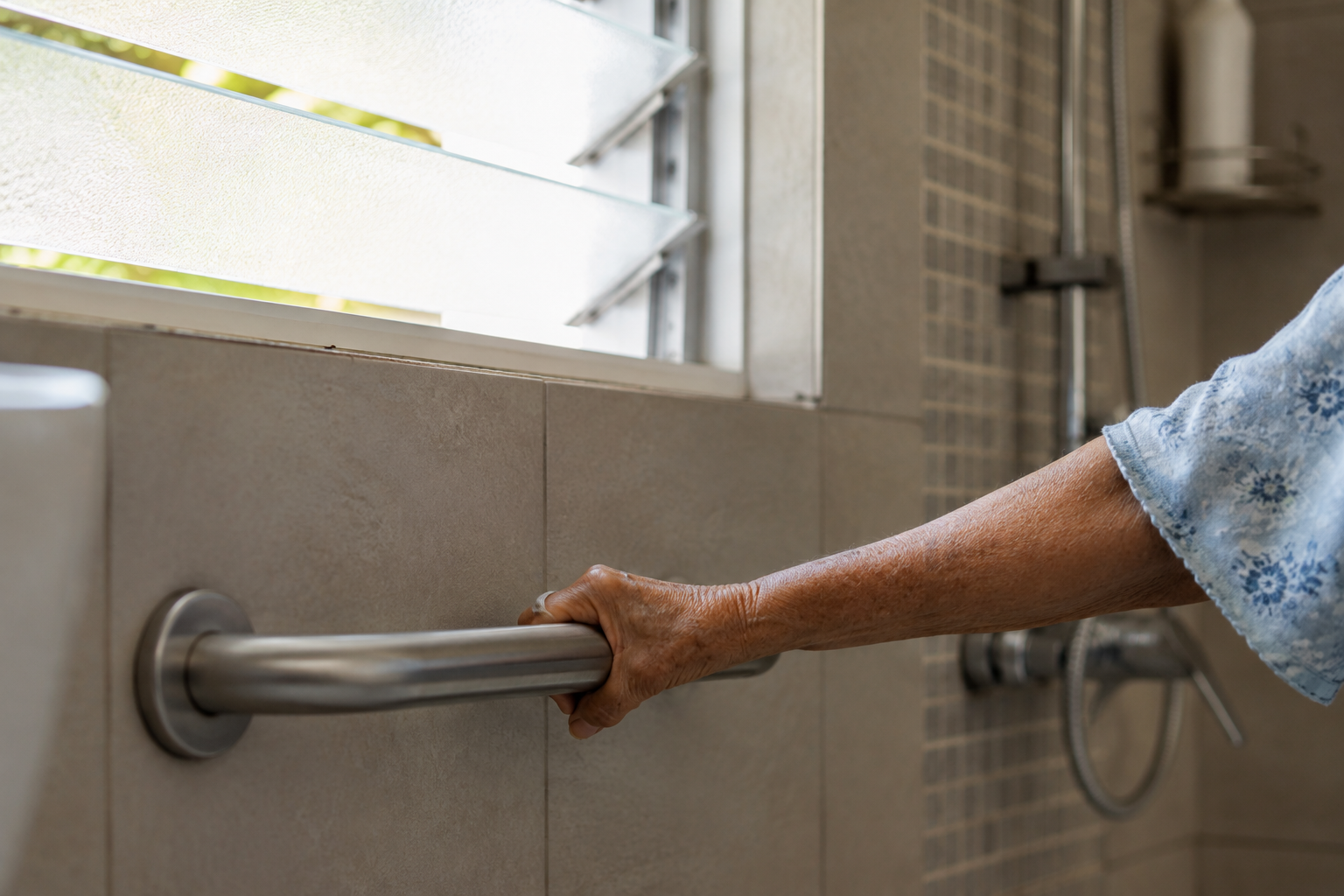
This is where to spend your money if you spend it anywhere. Polished tiles, water and bare feet are a bad combination at any age, and after seventy they are the most dangerous few square metres in the house. A non-slip mat and one properly fitted grab rail, screwed into the wall rather than suction-cupped onto it, will do more for your parent's safety than anything else on this list.
The bedroom and the route to the toilet.
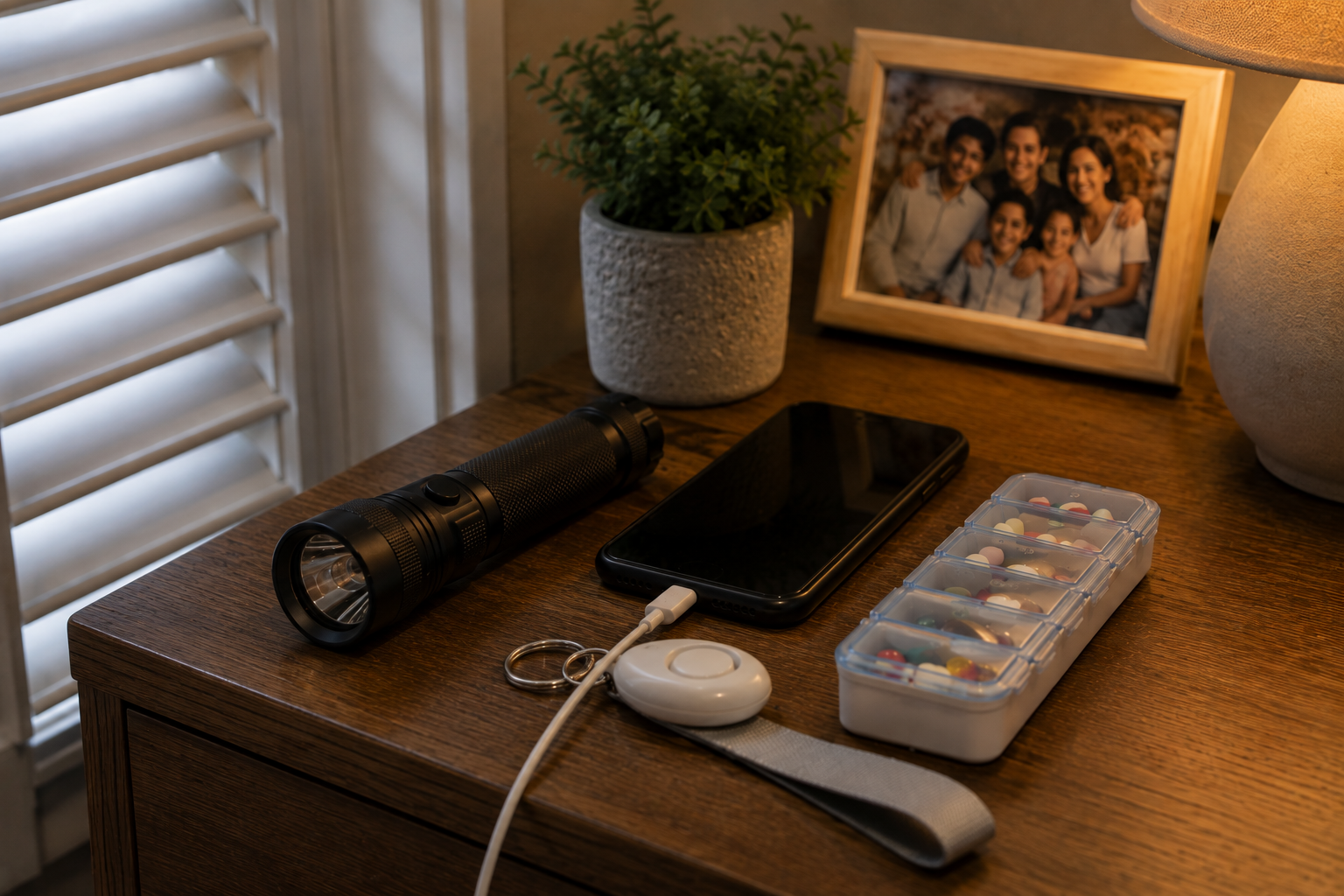
A torch or lamp within arm's reach of the bed, a clear floor, and a light that works between the bed and the bathroom. Slippers with a back and a grip sole rather than loose flip-flops. These four things together address the highest-risk journey in the house.
The part that gets left out of most checklists
Cyclone season changes the calculation, and no imported safety guide accounts for it.
Shutters are heavy. If your parent cannot close them alone, that needs to be someone's named job rather than a general assumption. Power cuts mean a torch beside the bed, not candles. Stored water should be in containers light enough to lift, because a full bucket is a fall waiting to happen. A week of medication should be somewhere findable in the dark. And a neighbour should know that your parent is at home alone and have a way to check on them.
None of this is dramatic. It is the sort of thing that gets sorted out in twenty minutes in November and then never worried about again.
If your parent does not want any of it changed
This is the common sticking point, and it is rarely about the rail. A grab rail in the bathroom is a visible statement that something has changed, and for someone who has run their own household for fifty years that can be harder to accept than the risk itself.
Two things help. Frame each change as protecting independence rather than conceding it, because that is honestly what it does: the rail is what allows her to keep washing herself without help. And start with the changes that are invisible. Clearing a path, changing a bulb and moving a cable are not concessions to age, and they build the habit before you get to the conversation about rails. We have written more about how to open that conversation without it turning into an argument.
Doing this from another country
If you are reading this from London or Melbourne, you cannot walk the house yourself, and a video call is a poor substitute because a phone camera flattens exactly the things you are looking for.
What works better is asking someone on the ground to walk it with the checklist in hand, then send you photographs of the bathroom, the bedroom route and the front steps. A sibling, a neighbour, or a carer during a first visit. The checklist gives them something specific to look at, which is far more useful than asking whether the house seems safe.
Download the checklist
The one-page version is free to download, print and stick on the back of a door. There is nothing to sign up for. If it is useful to a family you know, please pass it on.
It forms part of The Mauritius Guide to Caring for an Elderly Parent at Home, our free guide for families across the island.
If you would rather have someone look with you
Homebird carers do this walk as a matter of course on a first visit, across Grand Baie, Pereybere, Goodlands and the villages around them. If you would like a second pair of eyes on your parent's home, send us a message. No obligation, and no charge for the conversation.
WhatsApp or call: +230 5811 8335
Email: hello@homebird.mu
Care that feels like family.
This article is for general information and is not a substitute for professional medical advice. If you are concerned about a family member's mobility or risk of falling, please speak to a doctor or physiotherapist.