
Your mother used to go to the market in Goodlands every Saturday. She knew which stall had the better tomatoes and she would be gone two hours, most of which was talking.
She stopped about eighteen months ago. The walk got harder, then she gave up driving, then her closest friend died and the whole thing lost its point. Now she is at home, she is perfectly safe, she does not need help washing or dressing, and she has spoken to nobody but you since Tuesday.
Companion care for the elderly is the answer to exactly this, and it is the kind of care families dismiss fastest, usually because it sounds like paying someone to be a friend.

What it actually involves
The name is misleading, because most of a companion visit is practical.
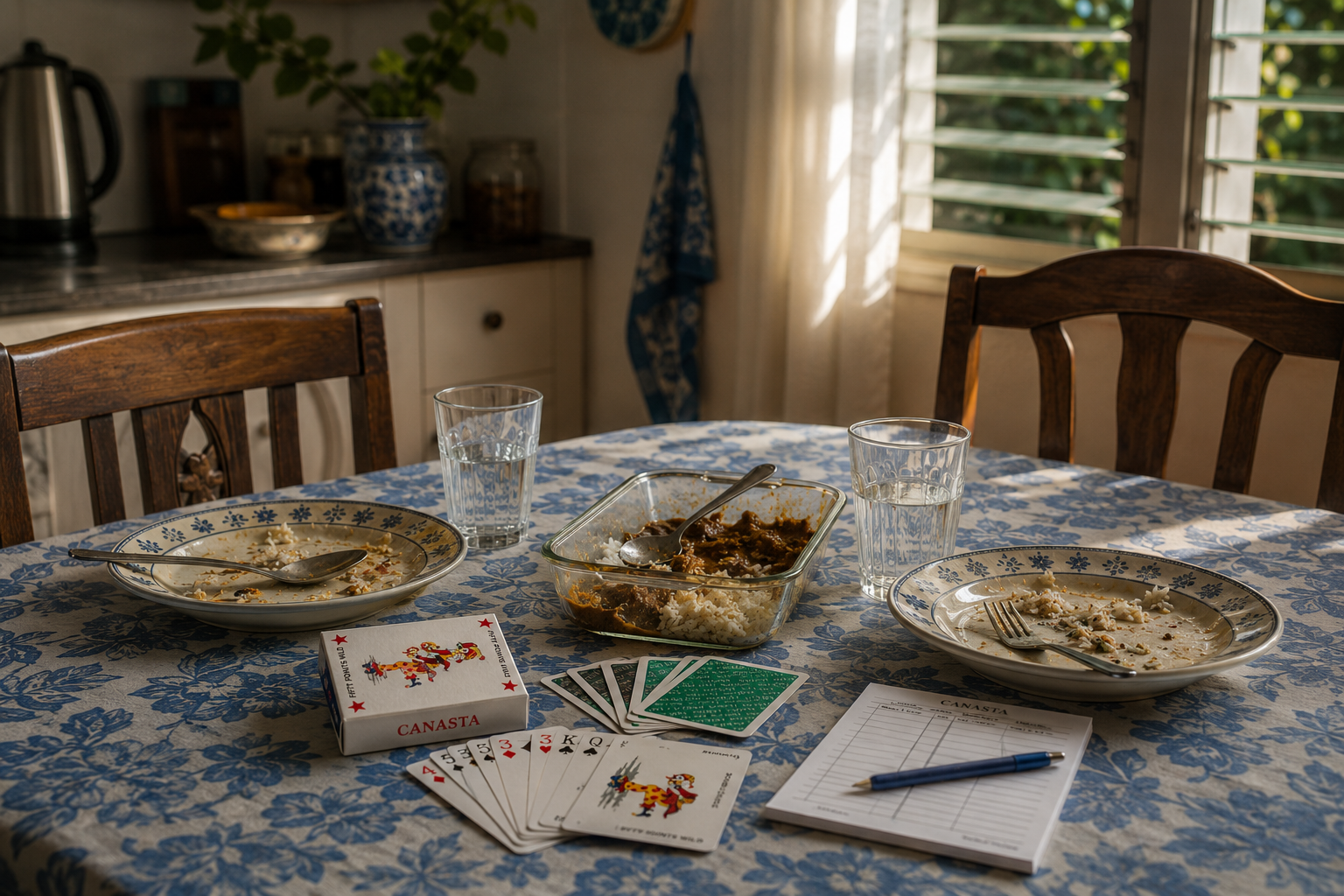
Meals. Cooking something proper, and eating it together. People living alone stop cooking for one long before they stop being able to cook, and this is the single most common thing a companion carer changes.
Shopping and errands. The market, the pharmacy, the bank. Either together, which is better because it is an outing, or on her behalf when it is not a good day.
Getting out. A walk, a lift to an appointment, or to the temple or church on a Sunday. For anyone who has given up driving this is often the difference between a life and a house.
The house ticking over. Laundry, tidying, watering things, the small tasks that quietly stop happening.
And the conversation. Which is not filler. It is a large part of why the rest works.
What it is not is personal care. A companion carer does not help with washing, dressing or toileting, and that is a genuinely different kind of help requiring different training.
The part families do not anticipate
Somebody who comes twice a week also sees things, and this turns out to be the most valuable thing they do.
They notice that the fridge is fuller than it was but the bread has gone green. That she has worn the same cardigan for four days. That she told the same story twice in one visit. That she is holding the furniture on the way to the kitchen. That the pills in Wednesday's compartment are still there on Friday.
None of that appears on a phone call, because on a phone call your mother is fine. It is the reason families who start with companion care so often find out about a problem months earlier than they otherwise would, which is when it is still small enough to do something about.
On the phone, your mother is always fine. Somebody who is in the room twice a week knows whether she is.
"It feels sad to pay someone to be her friend"
This is the real objection, it is almost never said out loud, and it deserves a straight answer.
Nobody is a paid friend. A companion carer is someone doing a job they are good at, in the same way that a physiotherapist is not a paid gym partner and a teacher is not a paid parent. Real fondness usually grows, and it is genuine, but it is not what you are buying and it is not a replacement for her family.
The comparison that matters is not between paid company and her old life, with the market and her friends and everyone still alive. That comparison will always lose. It is between someone coming on Tuesday and Friday, and nobody coming at all.
There is also a version of this that is really about guilt: if she needs company, we should be providing it. Perhaps. But you live in Melbourne, your brother works six days a week, and neither of those things is going to change this year. Arranging for somebody to be there is not an admission that you have failed her. It is the most useful thing available to you from four thousand miles away.
The comparison is not between paid company and her old life. It is between somebody coming on Tuesday, and nobody coming at all.
It is not only about being lonely
Being alone a great deal is not simply a sad way to live. The World Health Organization set up a Commission on Social Connection which reported in 2025, and it found that around a third of people over sixty worldwide are socially isolated, and that isolation and loneliness have measurable effects on physical and mental health, including cardiovascular disease and depression.
Two things follow from that. It is far more common than families assume, which means there is nothing unusual or shameful about your mother's situation. And company is not a luxury bolted on after the practical needs are met. It is part of the practical needs.
What makes it work, and what makes it fail
Companion care depends more on the match than any other kind of care, because there is no task list holding it together. Four things decide whether it works.
The same person every time. A rotating series of pleasant strangers is not company, it is a succession of first meetings. Continuity is the whole thing.
The right language. Someone who is tired or unwell reverts to the language they grew up with. A carer who cannot follow her in Creole will be a polite presence rather than a companion.
Something in common. Not everything, but something. Cooking, a garden, faith, an interest in the same television. It gives the visits somewhere to go.
Her agreement. Companion care imposed on someone who does not want it fails within a month. This is the one kind of care where the person receiving it has to be genuinely willing, which is also why it is the easiest one to start with: it asks nothing physically and threatens nothing.
When it is not the right answer
Companion care is not enough if your mother needs help washing or dressing, if she is falling, if she cannot be safely alone, or if there is anything clinical involved. In those situations it is the wrong tool and stretching it to fit helps nobody.
It is also not the answer if she is genuinely content alone. Some people are, and the fact that a life looks quiet from outside does not mean it is unhappy from within. Ask her before deciding.
But for someone who is managing perfectly well and has simply stopped seeing anybody, it is usually the right place to start, and it is the least expensive care there is. Where it fits among the other options is set out in how much care your parent actually needs.
This article is part of The Mauritius Guide to Caring for an Elderly Parent at Home, our free guide for families across the island. See the full guide.
Talk to Homebird
Homebird is a professional in-home care agency serving families across Northern Mauritius. If your parent is managing well but seeing almost nobody, that is worth a conversation. No obligation, no pressure.
WhatsApp or call: +230 5811 8335
Email: hello@homebird.mu
Care that feels like family.
This article is for general information and is not a substitute for professional medical advice. Figures on social isolation are from the WHO Commission on Social Connection, 2025.