
What Makes a Great Professional Carer, and How We Screen for It
Anyone can be taught the tasks of care. How to help someone bathe, how to move them safely, how to keep a record. Those are skills, and skills can be learned. But the thing that makes someone truly great at this work is harder to teach, and it is what we look for first. Here is what it actually takes, and how we look for it when a carer applies to Homebird.
If you are a carer, or thinking of becoming one, this is worth reading. Not because it is a test you have to pass, but because the best carers already have most of this in them. You may recognise yourself here.

The qualities that matter most
Care is not done in a hospital or an office. It is done in someone's home, often alone, on good days and hard ones, with a person who may be frightened, unwell, or simply tired of needing help. No checklist can prepare you for all of that. What carries you through it is the kind of person you are.
Over the years, the same handful of qualities keep showing up in the carers families love most. A certificate tells us what you can do. These tell us who you are, and in our experience, they matter more. Here are the seven we look for.
1. You show up
Reliability is the quiet heart of good care. A family is trusting you with someone they love. When you say you will be there at eight, being there at eight, every time, is worth more than almost anything else. A brilliant carer who cannot be relied on is not a brilliant carer.
2. You are genuinely kind, and patient
You cannot fake warmth, and older people feel the difference at once. The best carers are patient when someone is slow, gentle when someone is frightened, and kind on the hard days as well as the easy ones. Patience is not something you use up. It is something you carry.
3. You protect a person's dignity
Helping someone wash or dress is a private thing. A great carer does it in a way that leaves the person feeling respected, not embarrassed. You never talk down to them. You never rush them. You treat them the way you would want your own mother or father to be treated.
4. You notice things
Families rely on carers to be their eyes. A good carer sees the small changes: eating less, a new bruise, a quieter mood, a skipped medicine. Noticing early, and saying something, can keep a person out of hospital. This is one of the most valuable things you do.
5. You are honest and trustworthy
You are alone in someone's home, near their money, their keys, their private life. Trust is everything in this work. A great carer never takes what is not theirs, never cuts a corner when no one is watching, and tells the truth even when it is difficult.
6. You stay calm when things go wrong
Someone falls. Someone chokes. Someone becomes confused or upset. A great carer does not panic. They act, they call for help, and they keep the person safe and reassured. Calm is a skill you build, and it is one families feel safest around.
7. You keep learning
The best carers never stop improving. They ask questions, take training, and want to be better next year than they are today. Care is always changing, and a carer who keeps learning is a carer who keeps growing, in skill and in pay.
Character first, skills second
Here is the truth at the centre of all this. We can teach a kind, reliable person the skills of care. We cannot teach a skilled person to be kind. That is why, when someone applies, we look at who they are first, and what they can already do second.
It also means you do not need to be the highest grade to be a great carer. A companion carer who shows up, listens, and treats people with warmth is worth their weight in gold. And whatever grade you are today, you can grow your skills and move up over time. The four carer grades, from companion carer to registered nurse, are set out in the graphic on this page.
Companion Carer
For company through the day and the small routines that keep a home feeling like home.
- Companionship and conversation
- Meal preparation
- Medication reminders
- Light errands and household help
Trained Carer
Everything above, plus help with the personal parts of the day, given gently and with respect.
- Bathing and grooming
- Dressing and toileting
- Mobility and safe transfers
- Holds a carer licence
Health Care Assistant
A qualified assistant, for people who need closer clinical attention day to day.
- Catheter and stoma care
- Pressure area care
- Feeding support
- Watching for changes that need a doctor
Registered Nurse
Registered with the Nursing Council of Mauritius, for care that needs a nurse.
- Wound care and dressings
- Injections and drips
- Clinical assessment
- Care plan sign-off
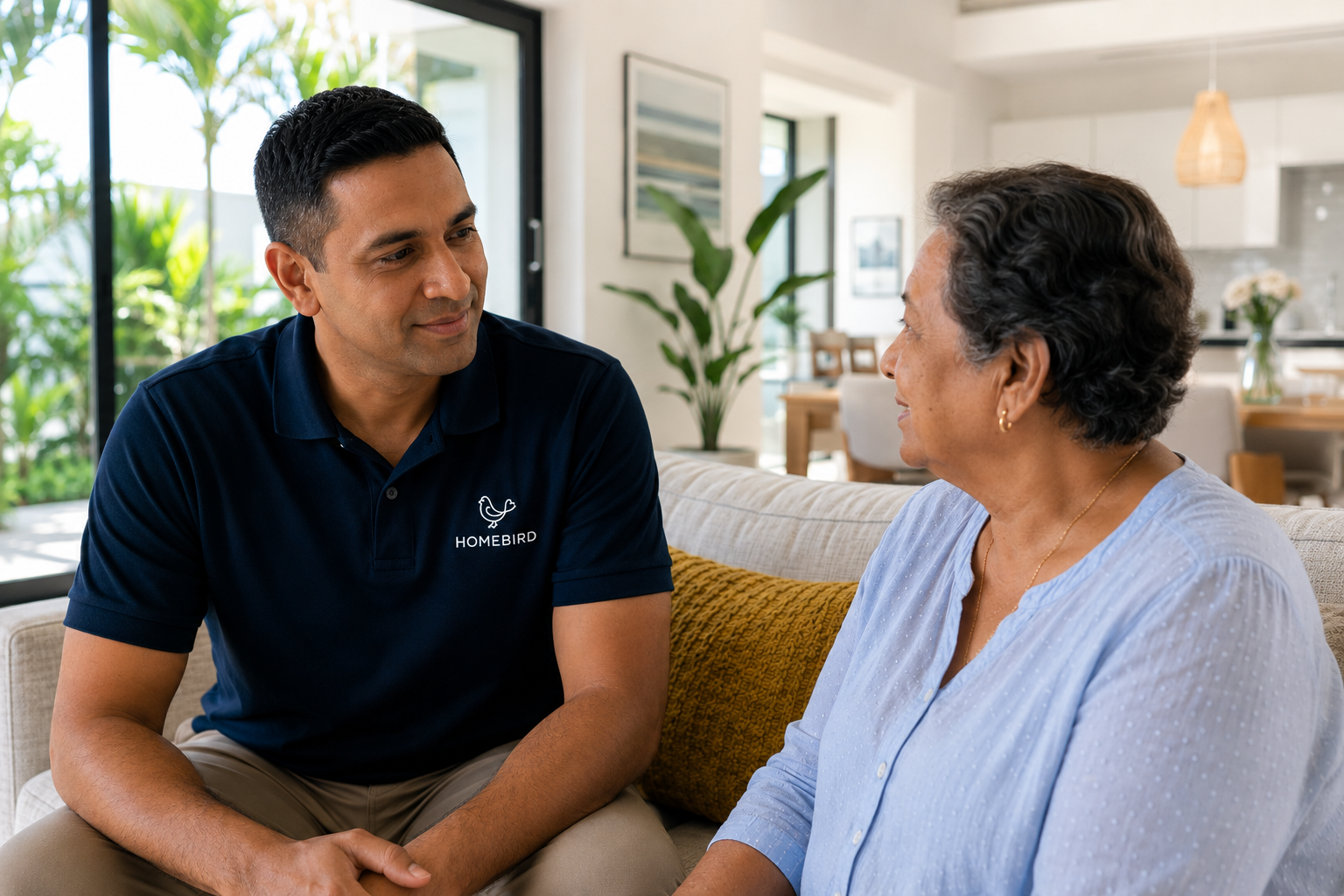
How we screen for it
Because these qualities matter so much, we take care over who we bring into the Homebird family. Here is what that looks like when you apply. None of it is meant to catch you out. It is there to protect the families we serve, and to make sure every carer who wears our shirt can be proud to.
A real conversation. We talk with you properly. Not just about your experience, but about how you think, how you treat people, and why you do this work.
Background and reference checks. We check who we are hiring, and we speak to people who have seen your work. This is normal, and any good agency should do it.
Your training and licence. We look at what you are qualified to do, so we place you in the right work at the right grade.
First aid and Homebird training. Before any placement, you complete our training, so you know how we do things and what we expect.
The right match. We think about which client and which home suits you, because good care depends on a good fit, not just a warm body sent to fill a slot.
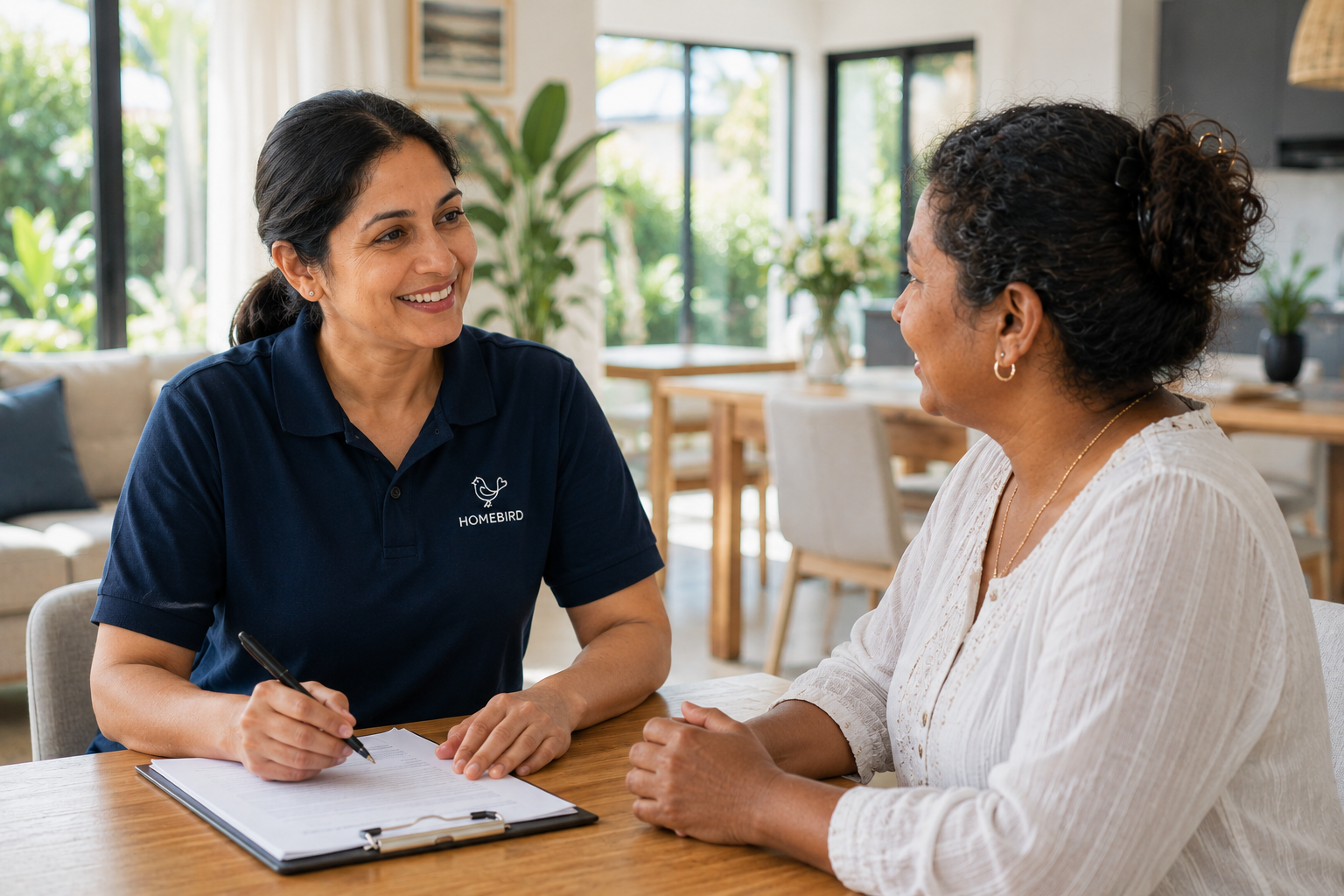
If you recognise yourself in this article, we would like to meet you. You do not need to be perfect, or the most qualified person on the island. If you are reliable, kind, honest and willing to learn, you already have what matters most. The skills, we can build together.
Why we are so careful about this
Every carer we send into a home carries the Homebird name with them. A family judges us by the person who walks through their door. That is a big responsibility, and we do not take it lightly. It is also why we treat our carers well: good people do their best work when they are respected, supported and paid fairly.
When we get this right, everyone wins. The family gets someone they can trust. The carer gets steady, respectful work. And bit by bit, the whole standard of care in Mauritius rises. That is the point of all of it.
Come and work with us
If you are a carer in the north, and this sounds like you, we would love to hear from you. Whatever your grade or experience, tell us a little about yourself and why you care.
WhatsApp or call: +230 5811 8335
Email: hello@homebird.mu
Care that feels like family. For the families we serve, and for the carers who make it possible.