
You visit your parents like you always do, and something feels off. The fridge is nearly empty. Your mother is wearing the same cardigan she wore yesterday, and the day before. There is a pile of unopened post by the door, and a faint smell of something left too long on the stove. Nothing on its own would alarm you. Together, they stay with you long after you have said goodbye.

The hardest part of caring for an ageing parent is often knowing when the moment has come to step in. Decline rarely announces itself. It creeps, and a proud parent will minimise it, because admitting they are struggling feels like losing something. This article sets out the signs worth watching for, so you can tell the difference between ordinary ageing and a parent who genuinely needs more help, before a fall or a crisis makes the decision for you.
Why this is so easy to miss
Two things conspire to hide the signs. The first is that change is gradual, and if you see your parent often, you adjust to each small decline without noticing the sum of it. Families who visit less, returning from overseas or from a busy life in the capital, often see it more sharply precisely because they have a before and after to compare.
The second is that parents cover for themselves. They tidy up before you arrive, wear a good outfit for the visit, and steer conversations away from anything worrying. This is not deceit. It is dignity, and the very natural wish not to be a burden. It also means the signs are often quiet ones, and you have to look gently but honestly.
The signs, grouped by what they tell you
1. Their body and self-care
Weight loss. Clothes hanging loose, a thinner face, a belt on a tighter notch. Unexplained weight loss in an older person is one of the most important signs there is, and it often points to poor eating, low mood or an underlying illness.
Slipping personal care. Unwashed hair, body odour, an unshaven face on someone always clean-shaven, long or dirty nails, or the same clothes worn day after day. When grooming slides in someone who was always particular, something has changed.
Poor mobility. Holding the furniture to move around, struggling out of a chair, a new shuffle, or unexplained bruises that suggest falls they have not mentioned.
2. The home itself
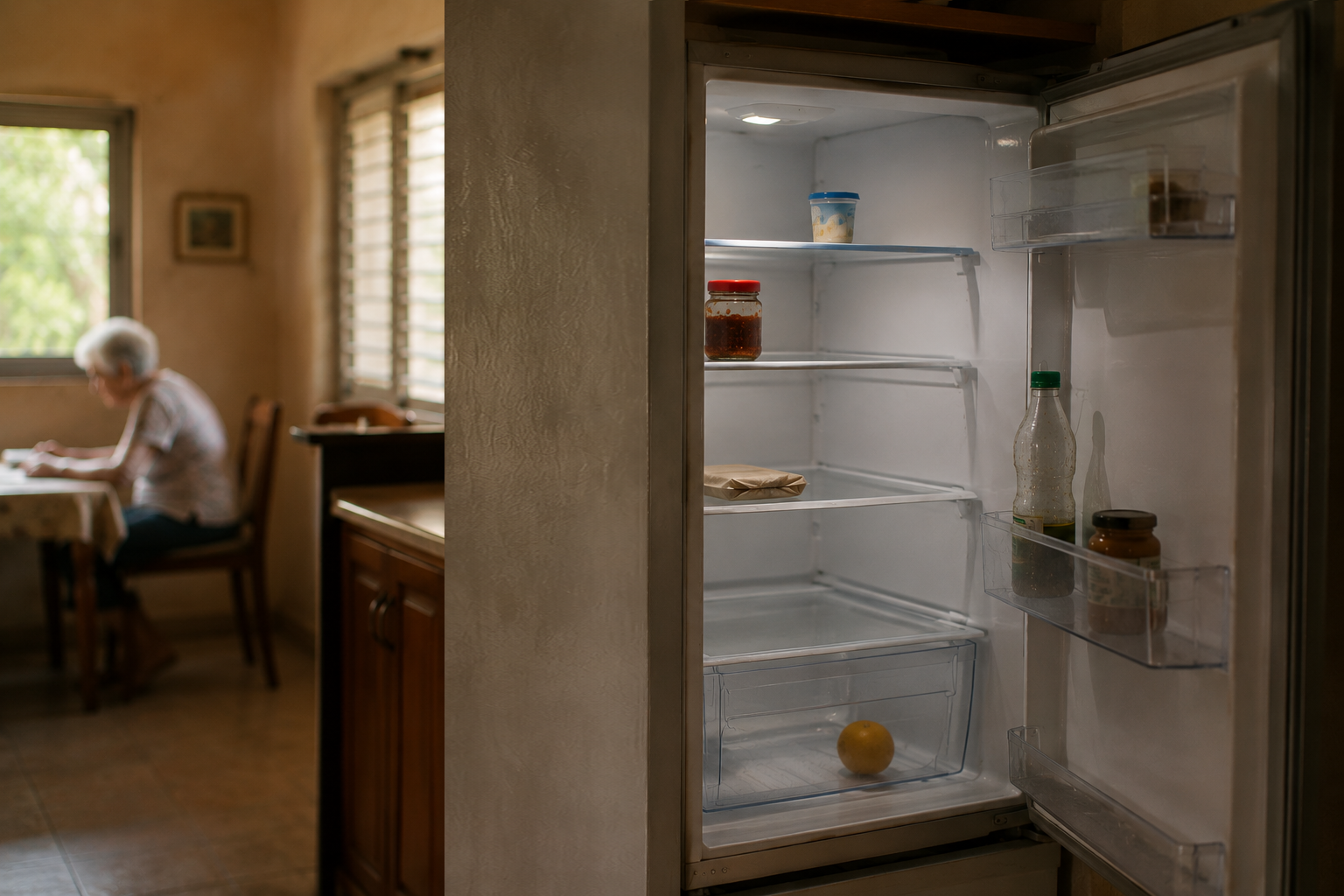
Little or spoiled food. An empty fridge, or food well past its date. This is one of the clearest signs that daily life has become too much.
A decline in cleanliness. A once-tidy home now cluttered or dirty, dishes piling up, laundry undone, bins overflowing. A sudden drop in housekeeping standards often signals reduced mobility, low mood or memory trouble.
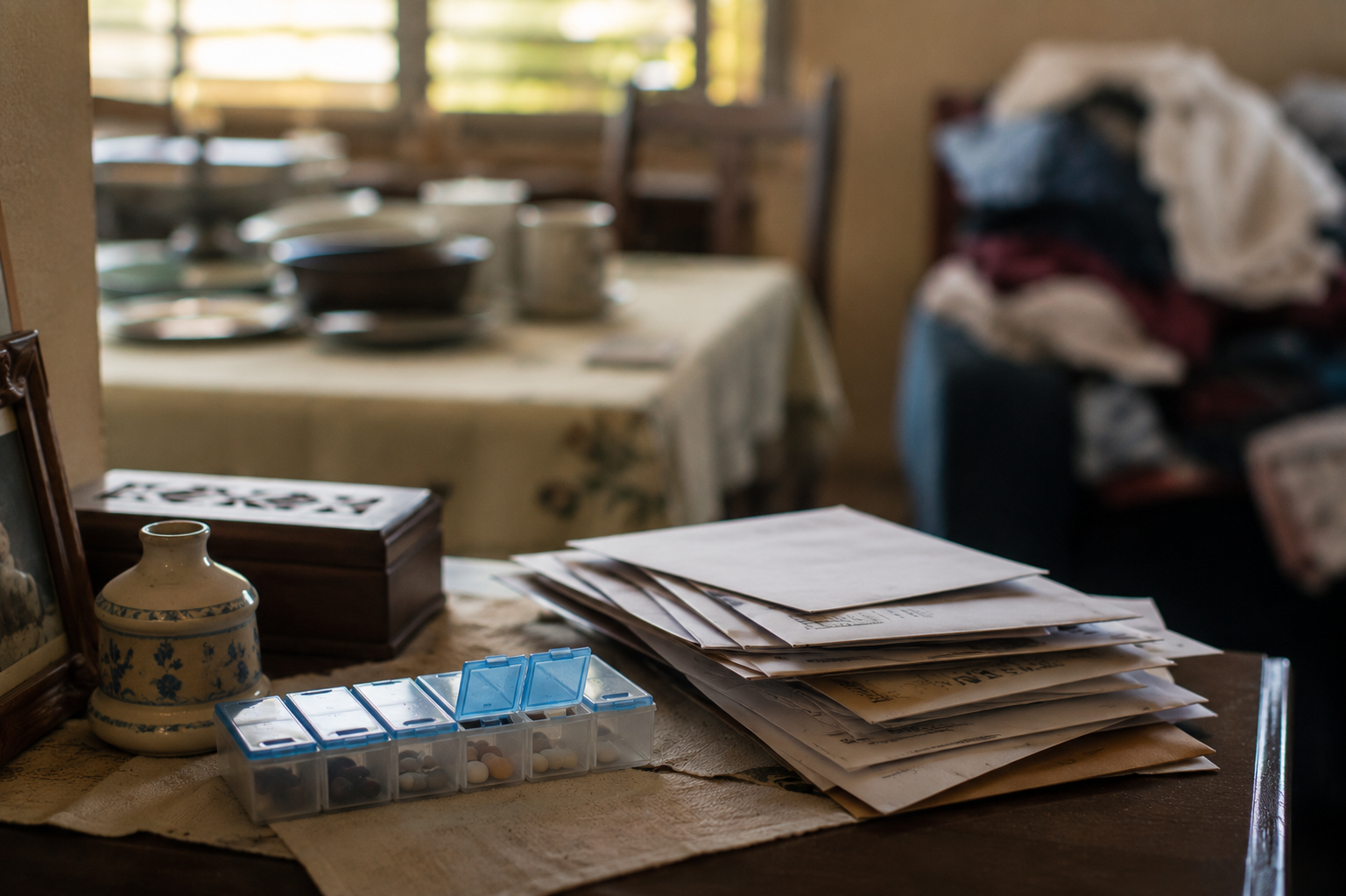
Things not working. Bulbs unchanged, small repairs ignored, bills unpaid and letters unopened. The everyday maintenance of a life quietly stopping.
Signs of small accidents. Scorch marks on pans, a burnt smell, or a kettle left to boil dry. These are not just untidiness. They are safety warnings.
3. Health and medication
Medication muddle. Pill boxes still full at the end of the week, or empty too soon. Missed or doubled doses. This matters enormously in Mauritius, where many older people manage several medicines for diabetes, blood pressure and heart conditions, and where a missed dose can land someone in hospital.
Missed appointments. Skipping the doctor or not collecting prescriptions from the pharmacy, often because getting there has quietly become too hard.
Unmanaged conditions. Swollen legs, sores that are not healing, or a diabetic parent whose control has slipped.
4. Mind and mood
Memory changes. Repeating stories, forgetting recent conversations, missing appointments, or getting confused about the day. Some forgetfulness is normal with age. A pattern that is getting worse is not, and it is worth reading our guide to the early signs of dementia◊ if this is what worries you.
Withdrawal. Pulling back from the temple, church or mosque, from friends, from the market, from things they always loved. Isolation is genuinely harmful to older people's health, not just their happiness.
Low mood or personality change. A cheerful parent grown flat or anxious, a gentle one grown irritable. Depression is common and treatable in older people, and it is often mistaken for "just getting old".
One sign that outweighs all the others: a fall. If your parent has fallen, even once, treat it as a clear signal rather than a one-off. Falls are the leading cause of serious injury in older people, and a first fall very often predicts more. It is one of the strongest reasons families finally arrange support, and one of the best reasons not to wait.
What to look for on your next visit
You do not need to interrogate anyone. On your next visit, quietly notice a few things:
Open the fridge and a cupboard. Is there fresh food, and is it in date?
Glance at the medication. Does the amount left make sense for the day of the week?
Look at your parent, kindly. Weight, grooming, clean clothes, how they move.
Notice the home. Clean and maintained, or slipping? Any burnt pans or scorch marks?
Look at the post. A pile of unopened letters says a lot.
Feel the mood. Engaged and social, or withdrawn and low?
None of these is proof on its own. A pattern across several is your signal that it is time to act.
What to do next
Start a gentle conversation
Lead with love, not alarm. "I worry about you, and I want you to be comfortable at home" lands far better than "you cannot cope any more". Ask what they find hard, and listen. Most parents, given the chance, will admit to more than you expect.
See a doctor
Many of these signs have treatable causes. Weight loss, low mood, confusion and poor balance can all stem from things a doctor can address, from an infection to a medication problem to depression. Rule the fixable things in or out first.
Make the home safer
Small changes prevent big events. Better lighting, grab rails in the bathroom, removing loose rugs and clutter, a clear path to the toilet at night. Cheap, quick, and genuinely protective.
Consider what support would help
This is rarely all or nothing. It might mean a few hours of help a week, someone to keep an eye on medication and meals, or, where needs are greater, live-in care◊. And if you are weighing whether your parent can stay at home at all, our guide to home care versus a care home◊ walks through that decision honestly.
If several of these signs are ringing true, trust that. The families who act early, while a parent is still mostly independent, almost always have an easier time than those who wait for a crisis. Support introduced gently now is accepted far more willingly than help that arrives after a fall.
How home care helps, and why early is easier
Bringing in support does not mean taking over your parent's life. At this stage it usually looks small: a carer visiting a few times a week for company, a hand with meals and medication, a walk, a lift to the pharmacy or the market. Quiet, practical help that lets your parent carry on living the life they know.
The real value, especially for a family spread between Grand Baie, Port Louis and overseas, is having trained eyes on the ground. A carer notices the changes you cannot see from a distance, and tells you honestly how your parent really is, not just how they sound on the phone. For families across Northern Mauritius, from Goodlands and Triolet to Pereybère and Grand Gaube, that steady presence is often what allows a parent to stay safely in their own home for far longer.
Wondering what comes after this? Our free guide for Mauritian families covers the whole picture, from first signs through to choosing care.
Talk to Homebird
Homebird is a professional in-home care agency serving families across Northern Mauritius. Our carers are trained, verified and supported, and we build care around the person rather than around a rota. If you are worried about a parent and are not sure what you need yet, that is exactly the right time to talk to us.
WhatsApp or call: +230 5811 8335
Email: hello@homebird.mu
Care that feels like family.
This article is for general information and does not replace medical advice. If you are worried about a parent's health, please speak to a doctor. Guidance on warning signs draws on established elderly care resources and geriatric care standards.